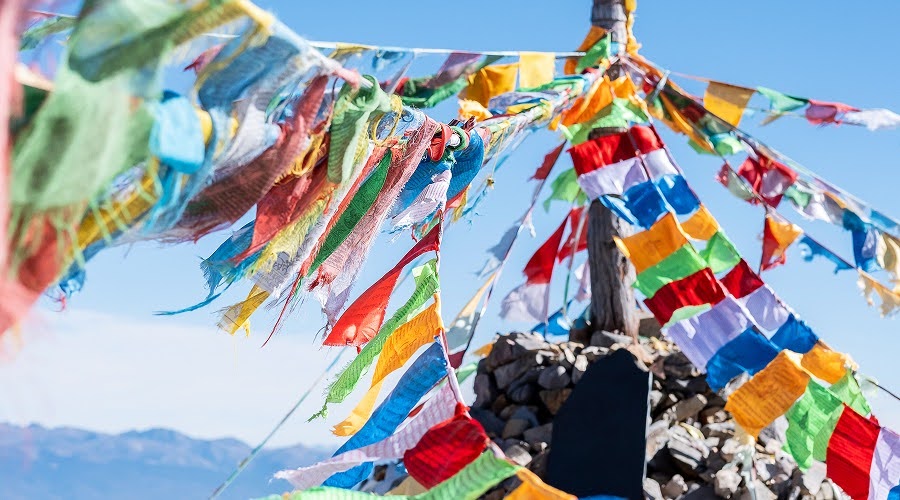
A burst of colourful ribbons looms in the distance, stretching between rocks, rooftops, or mountain ridges.
These cloth flags are among the most recognisable symbols of the Tibetan Plateau.
They are sacred cloth banners printed with prayers, mantras, and auspicious symbols. These carry hopes and prayers intended to spread blessings, compassion, peace, and good fortune to all living beings. As the wind moves through the flags, it is believed to carry these positive intentions across the surrounding landscape.
For many first-time visitors, they become one of the defining visual memories of Tibet.
Beneath their striking appearance lies a spiritual tradition that speaks a language deeper than decoration.
The story of Tibetan prayer flags begins long before Buddhism arrived in Tibet.
Many scholars trace their origins to the ancient Bon tradition, an indigenous spiritual system that flourished throughout the Himalayan region before the spread of Buddhism. Early practitioners believed that natural forces, especially wind, carried sacred energy through the landscape.
Colourful banners and symbolic cloths were often used in rituals intended to harmonise human life with these elemental forces.
When Buddhism entered Tibet during the seventh century, these older traditions did not disappear. Instead, they gradually merged with Buddhist teachings brought from India and adapted to the unique cultural landscape of the Himalayas.
Over centuries, monks began printing sacred mantras, prayers, and protective symbols onto cloth banners. The resulting tradition evolved into the prayer flags seen throughout Tibet today.
This blending of influences is one reason the question of what the Tibetan prayer flags are cannot be answered solely through a religious lens.
They represent a uniquely Tibetan synthesis of landscape, spirituality, history, and cultural identity.
This blending of ancient beliefs and Buddhist philosophy is one reason Tibet feels so distinct from other Himalayan destinations. Travellers interested in exploring how spirituality, trade, and cultural exchange shaped wider regions of Asia often discover similar themes through luxury Silk Road tours with Intriq Journey, where ancient caravan routes connected diverse civilisations across deserts, mountains, and high plateaus.
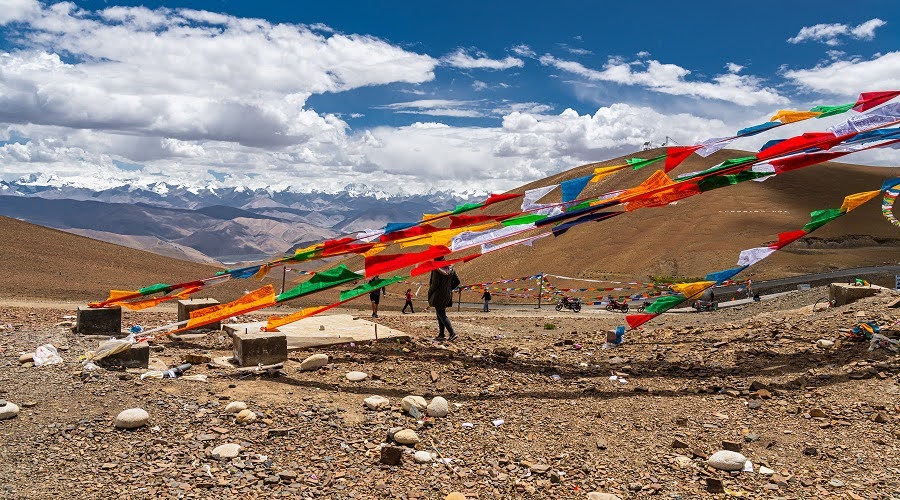
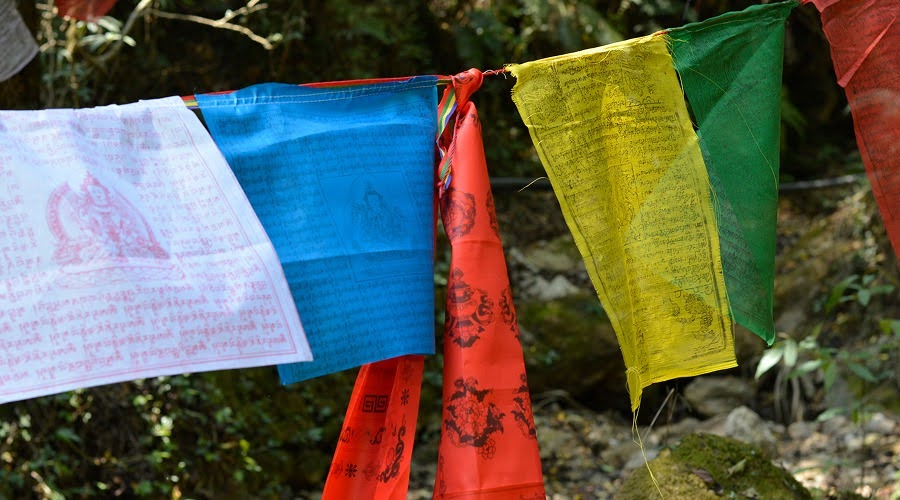
For travellers encountering prayer flags for the first time, it is often the colours that leave the strongest impression. Blue, white, red, green, and yellow ripple across the landscape, standing out vividly against snow peaks, golden grasslands, and weathered stone monasteries.
Yet there is a deeper meaning behind Tibetan prayer flags, which lies in what those colours represent.
Prayer flags traditionally appear in a fixed sequence of five colours:
Together, these colours embody the five elements that form the foundation of Tibetan cosmology.
The sequence is not arbitrary. Each element is believed to exist in relationship with the others, creating balance within both the natural world and human life.
Seen in this light, prayer flags become more than religious symbols. They are visual reminders of interconnectedness, expressing a worldview in which human wellbeing depends upon harmony with the wider environment.
This elemental philosophy is particularly meaningful in Tibet, where daily life has long been shaped by powerful landscapes, high altitudes, and an intimate relationship with nature.
Among the many sacred images found on prayer flags, one appears more frequently than any other.
At the centre of countless banners stands a mythical horse carrying a flaming jewel upon its back.
This figure is known as the Wind Horse, or Lungta.
For this reason, many prayer flags are specifically called Lungta prayer flags.
The concept of Lungta occupies an important place within Tibetan culture. While exact interpretations vary, the Wind Horse is often associated with vitality, fortune, confidence, spiritual strength, and positive energy.
The horse itself symbolises movement and momentum. The jewel it carries represents wisdom and enlightenment.
Together, they create one of the most enduring examples of Lungta wind horse symbolism, expressing the idea that spiritual wellbeing can elevate both individual lives and the wider community.
Surrounding the Wind Horse are often prayers, mantras, and images of protective deities.
As the flags move in the wind, these blessings are believed to spread across the surrounding landscape, benefiting all who pass through it.
This collective orientation is one of the qualities that distinguishes Tibetan prayer flags from many other forms of devotional practice. Their purpose is not primarily personal. They exist for the wellbeing of everyone.
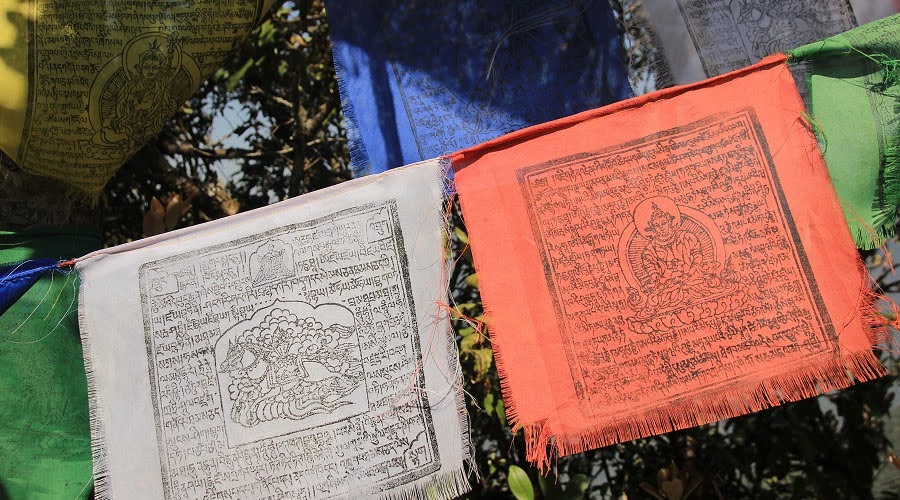
One aspect of prayer flags often surprises visitors.
Unlike sacred objects that are carefully preserved, prayer flags are expected to weather and fade.
Months of sun, wind, snow, and rain gradually soften the colours until the cloth eventually frays and disintegrates.
This process is not viewed as damage.
Instead, it forms part of the symbolism.
As the printed prayers fade into the environment, it is believed that their blessings have already been released into the world. The gradual disappearance of the flags also reflects Buddhist teachings about impermanence, reminding observers that all things eventually change and pass away.
New flags are often raised alongside older ones, creating a visible cycle of renewal that mirrors broader Tibetan spiritual beliefs.
For many travellers, this quiet acceptance of impermanence becomes one of the most memorable aspects of encountering prayer flags across Tibet.
Prayer flags appear throughout the Tibetan Plateau, often marking places where geography and spirituality intersect.
Travellers commonly encounter them in several locations.
High passes are among the most dramatic places to encounter prayer flags.
As travellers reach the summit of a pass, they often find thousands of flags stretching across the ridgeline, creating waves of colour against vast Himalayan horizons.
These locations are traditionally associated with prayers for protection, safe journeys, and gratitude for a successful crossing.
Many monasteries display prayer flags on rooftops, courtyards, and surrounding hillsides.
Places such as the renowned Jokhang Temple and the great monastic institutions surrounding Lhasa often feature prayer flags integrated into the sacred landscape, connecting architecture with the sky above.
Along traditional pilgrimage paths, prayer flags serve as reminders of devotion and spiritual aspiration.
Travellers walking sections of the famous Barkhor circuit often encounter flags accompanying prayer wheels, shrines, and sacred monuments.
Some of the most spectacular displays occur far from settlements, where prayer flags stretch across isolated ridges beneath towering mountains.
In these settings, their symbolism feels especially powerful. Wind, landscape, and prayer become part of a single experience.
Encountering prayer flags in their natural setting is often very different from seeing them in photographs. The scale of the landscape, the altitude, the silence, and the constant movement of the wind all contribute to the experience. For many travellers planning a journey to Tibet, working with an experienced tour agency in Singapore helps provide the cultural context needed to appreciate these encounters beyond their visual appeal.
These banners may be beautiful to photograph, but they remain sacred objects within Tibetan culture. Travellers should approach them respectfully.
Photography is generally possible in open outdoor settings, but it should be done with sensitivity. Avoid treating prayer flags as casual props, pulling them aside for a clearer shot, or posing in ways that may feel disrespectful. If local worshippers are praying nearby, give them space and avoid interrupting their rituals.
Travellers should also avoid stepping over prayer flags, touching them unnecessarily, rearranging them, removing old and faded flags, or taking them home as souvenirs.
Approaching prayer flags with this awareness allows travellers to appreciate them not only as striking symbols of Tibet, but as living expressions of faith, generosity, and respect for the natural world.
Many visitors initially photograph prayer flags because they are visually striking.
Yet after learning their meaning, something often changes.
The flags cease to be simply colourful features of the landscape. Instead, they become expressions of an entire worldview, one that sees spirituality not as something separate from daily life but as something carried continuously through mountains, valleys, weather, and movement.
For travellers seeking a deeper cultural understanding, this shift in perspective is often one of the most rewarding aspects of exploring Tibet. In many ways, the answer to what the Tibetan prayer flags are extends beyond their physical form; they represent a philosophy that connects people, nature, and spirituality across the Tibetan Plateau.
It is the difference between seeing a symbol and understanding what it represents.
Prayer flags are among the most photographed symbols in Tibet, but their true significance only becomes clear when experienced within the landscapes, monasteries, and traditions that gave rise to them. Understanding what the Tibetan prayer flags are transforms a beautiful scene into a deeper appreciation of Tibetan culture, spirituality, and the enduring relationship between people and place.
This philosophy sits at the heart of every Intriq Journey itinerary. We believe that Tibet is best experienced not as a checklist of landmarks, but as a living cultural landscape shaped by centuries of spiritual tradition.
Throughout the journey, seemingly simple sights reveal deeper layers of meaning. A line of prayer flags draped across a mountain pass becomes more than a striking photograph when you understand the beliefs behind it. A monastery visit becomes richer when its rituals, symbols, and history are placed within the broader story of Tibetan Buddhism. Even a walk through Lhasa’s ancient pilgrimage routes takes on new significance when viewed through the perspective of those who have followed them for generations.
Through expert local insight, carefully curated cultural encounters, and thoughtfully designed itineraries, Intriq Journey helps travellers move beyond observation towards genuine understanding. The result is a more meaningful connection to Tibet’s landscapes, traditions, and spiritual heritage.
If you are ready to experience Tibet beyond the guidebooks and gain a deeper appreciation of the stories woven into its mountains, monasteries, and sacred sites, contact us to begin planning your bespoke Tibetan adventure.
For travellers departing Singapore’s tropical coastline, Tibet can feel almost mythical.
The humid sea air gives way to mountain winds. Dense urban skylines are replaced by vast valleys carved between snow-capped peaks. The familiar rhythm of city life gradually dissolves into something slower, quieter, and infinitely older.
Few places on Earth evoke the same sense of scale as the Tibetan Plateau.
Often referred to as the “Roof of the World“, this immense highland stretches across some of Asia’s most dramatic landscapes. Ancient monasteries cling to mountainsides, rivers cut through deep gorges, and distant horizons seem to extend beyond imagination.
Yet before travellers encounter Tibet’s sacred cities and soaring Himalayan vistas, an important transition takes place.
The body must adapt to altitude.
Understanding Nyingchi’s altitude and how acclimatisation works is one of the most important aspects of planning a successful journey to Tibet. Unlike many destinations where travellers can immediately begin exploring at full pace, Tibet rewards patience. The journey unfolds gradually, allowing both body and mind to adjust to a world that exists thousands of metres above sea level.
Against this backdrop, Nyingchi emerges as the ideal introduction to Tibet.
Located in southeastern Tibet, Nyingchi serves as a natural gateway to the plateau. Its comparatively lower elevation allows travellers to begin their adaptation gently while immersing themselves in some of Tibet’s most beautiful landscapes.
Rather than rushing into the heights, Nyingchi invites travellers to arrive slowly, settle into the rhythm of the mountains, and prepare for the extraordinary experiences that lie ahead.
To appreciate why Nyingchi plays such an important role, it helps to understand its geographical position.
The average elevation in Nyingchi is approximately 3,000 metres above sea level. While this is still considerably higher than most cities worldwide, it is notably lower than many destinations commonly included in Tibet itineraries.
Lhasa sits at approximately 3,650 metres.
Shigatse rises to roughly 3,850 metres.
Many remote regions of western Tibet and the Himalayan frontier exceed 4,500 metres, with some areas reaching considerably higher.
At first glance, these differences may seem relatively small.
In reality, a few hundred metres is enough to significantly influence how travellers feel.
As elevation increases, atmospheric pressure decreases. While the percentage of oxygen remains unchanged, each breath delivers less oxygen than it would at sea level. The body must therefore work harder to supply the oxygen muscles, organs, and tissues require.
This is why beginning a journey at a lower altitude in Nyingchi is a good start.
Travellers are introduced to altitude as they gradually ascend into the plateau’s higher reaches. The transition feels more natural, allowing the body valuable time to begin adapting before reaching destinations where oxygen levels become noticeably lower.
Equally important is the environment itself.
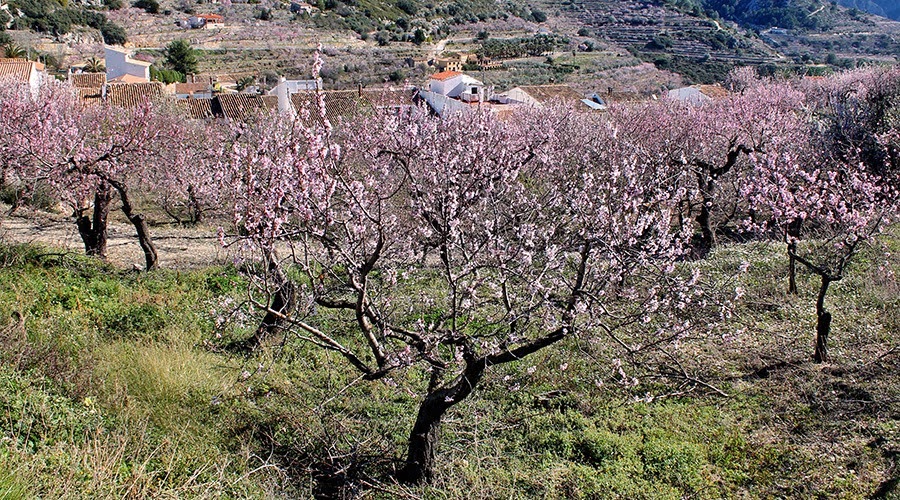
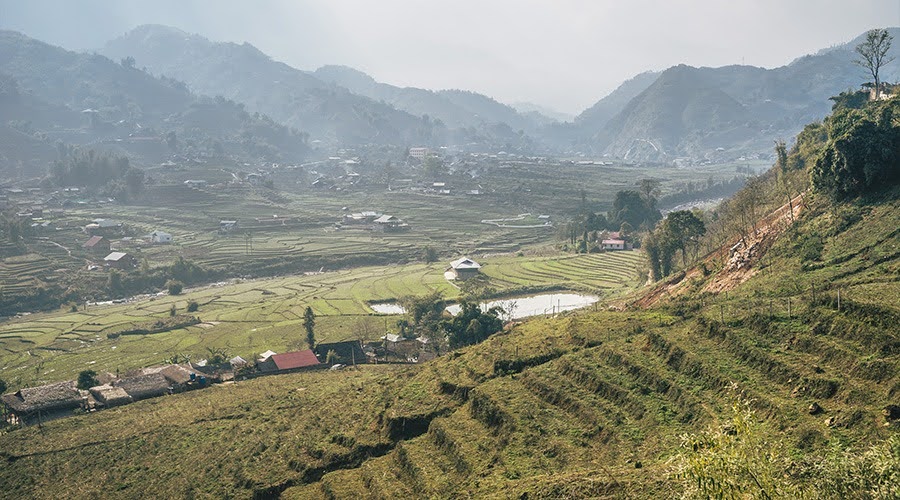
Unlike the stark, windswept landscapes many associate with Tibet, Nyingchi offers a more forgiving character. Snow-fed rivers weave through broad valleys. Forested slopes blanket the mountainsides. During spring, entire hillsides are transformed by blossoms that seem to float like clouds beneath distant peaks.
The result is a landscape that feels unexpectedly welcoming, offering a softer introduction to one of the world’s most dramatic regions.
When discussing travel at high altitudes, it is natural for travellers to wonder about altitude sickness.
The term Nyingchi altitude sickness generally refers to mild symptoms that can occur as the body begins to adapt to higher elevations.
Common symptoms may include:
For many travellers, these symptoms remain mild and temporary.
Fortunately, Nyingchi’s altitude compared to central Tibet often makes it a more comfortable starting point than arriving directly in higher-altitude destinations.
This does not entirely eliminate the possibility of symptoms, but it may reduce the intensity of the adjustment process.
Importantly, do note that physical fitness alone does not guarantee immunity from altitude sickness.
Even elite athletes can experience altitude symptoms, while less active travellers may acclimatise quickly.
The body’s response is highly individual.
Rather than focusing on avoiding every symptom, experienced travellers approach the journey with realistic expectations. Understanding that some mild adjustment is normal often helps remove unnecessary anxiety and allows travellers to focus on enjoying the experience itself.
For travellers who have previously experienced altitude sickness or related health issues, it is advisable to consult a medical professional before making travel plans. Alternatively, you can reach out to travel specialists from Intriq Journey for guidance.
Many first-time visitors see acclimatisation as an obstacle between them and Tibet’s highlights.
In reality, it often becomes one of the most memorable parts of the journey.
Tibet encourages a different pace of travel.
The mountains demand patience, while the landscapes invite observation.
A traveller wandering through a riverside village in Nyingchi, pausing beside flowering orchards or watching morning mist drift through a valley, may discover that slowing down is not a compromise but a privilege.
This shift in perspective transforms the acclimatisation process into a meaningful travel experience.
The days spent adjusting to altitude often become days spent noticing details that might otherwise be missed.
The scent of pine forests after rain, or the changing colours of distant mountains throughout the day.
The quiet rituals of local communities who have lived in harmony with these landscapes for generations.
In this sense, the process of adapting physically mirrors a deeper transition.
Travellers are not simply adjusting to elevation.
They are adjusting to Tibet itself.
While acclimatisation is a natural process, several simple practices can help support a smoother experience.
One of the most effective strategies is also the simplest.
Slow down.
The temptation to immediately explore every attraction can be strong, particularly in a destination as remarkable as Tibet. However, allowing the first days to unfold at a gentler pace gives the body valuable time to adjust.
A leisurely walk often provides a richer experience than an ambitious itinerary.
Altitude environments tend to be drier than many travellers expect.
Combined with increased respiration, this can contribute to dehydration.
Regular water intake supports circulation and helps maintain overall comfort during acclimatisation.
The first few days are not the ideal time for strenuous hikes or demanding physical activities.
Light sightseeing and gentle exploration are usually sufficient while the body adjusts.
Simple, balanced meals are often easier to digest during the acclimatisation period.
Many travellers find that lighter dining supports overall comfort while adapting to altitude.
Perhaps the most important advice is to remain attentive to how you feel.
Altitude affects everyone differently. Resting when needed and allowing flexibility within the itinerary often contributes significantly to a more enjoyable journey.
There is a reason Nyingchi is frequently described as one of Tibet’s most beautiful regions.
Often called the “Switzerland of Tibet”, the area possesses a character distinct from the austere grandeur found elsewhere on the plateau.
Here, forests soften the mountains.
Glacial rivers carve elegant paths through fertile valleys.
Wildflowers emerge across alpine meadows.
In spring, peach blossoms paint entire hillsides in delicate shades of pink, creating scenes that feel almost dreamlike against the backdrop of snow-covered peaks.
The mighty Yarlung Tsangpo River winds through the region, reflecting shifting skies and distant mountains. Ancient monasteries overlook valleys where traditional Tibetan culture continues to flourish.
For travellers arriving from bustling global cities, the contrast can feel profound.
The landscape encourages stillness.
The scale inspires humility.
The atmosphere carries a sense of timelessness that is increasingly rare in modern travel.
These experiences transform the acclimatisation period into something far richer than a waiting phase. They become an essential chapter of the journey itself.
Altitude management is one of the clearest examples of how luxury travel extends beyond comfort.
True luxury often lies in thoughtful planning.
A carefully crafted itinerary considers not only where travellers want to go, but how they arrive there.
Experienced specialists understand that the most rewarding journeys to Tibet follow the natural rhythm of acclimatisation. Destinations are sequenced deliberately. Travel days are balanced with periods of rest and exploration. Accommodations are selected not simply for comfort but for their ability to support the overall experience.
This level of planning allows travellers to focus fully on the landscapes, culture, and encounters that make Tibet extraordinary.
For discerning travellers seeking deeper exploration across Asia, a trusted tour agency in Singapore, such as Intriq Journey, can provide invaluable guidance in navigating the unique logistics of travelling in Tibet.
The same philosophy often extends across other remarkable overland journeys, including carefully curated luxury Silk Road tours, where geography, culture, and history unfold gradually across vast distances.
Luxury travel in Tibet is distinguished less by extravagance and more by thoughtful journey design. Rather than focusing on covering as many destinations as possible, luxury itineraries are typically paced around comfort, acclimatisation, and meaningful exploration. This is particularly important in Tibet, where altitude and travel distances can significantly influence the overall experience.
Another key difference lies in the level of personalisation and support. Private guides, dedicated vehicles, carefully selected accommodations, and flexible daily schedules allow travellers to explore at a pace that suits their interests and energy levels. This creates a more seamless experience, especially when travelling through remote regions of the plateau.
Luxury journeys also place greater emphasis on cultural depth and exclusive access. Beyond visiting Tibet’s most famous landmarks, travellers may enjoy more immersive encounters with local communities, heritage sites, and spiritual traditions. The result is a journey that balances comfort with a deeper appreciation of Tibet’s landscapes, history, and living culture.
At Intriq Journey, we believe that experiencing Tibet is about more than reaching its most iconic destinations. The journey into the plateau is an essential part of the experience itself, shaping how travellers connect with its landscapes, culture, and sense of place.
This is why our carefully curated itineraries are designed around thoughtful pacing and gradual acclimatisation. Understanding Nyingchi altitude, recognising the importance of allowing time for adjustment, and beginning in lower-elevation regions such as Nyingchi can contribute to a more rewarding journey.
Rather than rushing towards the highest points of the plateau, travellers are able to immerse themselves more fully in the scenery, heritage, and atmosphere that make Tibet so remarkable.
By combining expert planning, carefully selected accommodations, and personalised experiences, we create opportunities to explore Tibet’s natural grandeur, cultural richness, and spiritual heritage in a way that feels both seamless and deeply meaningful.
If you are considering a journey to the Roof of the World, contact us to begin planning a bespoke Tibet itinerary tailored to your interests, travel style, and aspirations.
The Northern Lights, also known as the Aurora Borealis, occur when charged particles from the sun collide with Earth’s magnetic field, creating sweeping ribbons of green, purple, and pink light across polar skies. Scientifically fascinating yet emotionally powerful, each display is unique. The lights shift, intensify, and fade without warning, making every sighting feel rare and deeply personal.
For many travellers, the first faint shimmer feels almost unreal, a subtle wash of light that gradually gathers confidence before unfurling across the sky.
There is often a hush that falls over the landscape when the aurora appears, as if the Arctic itself pauses in quiet acknowledgement.
As you stand beneath it, time seems suspended, the vastness of the sky placing everyday concerns into gentle perspective.
Yet asking where you can see auroras is only the beginning. The journey becomes as much about anticipation as arrival, about waiting beneath cold, star-laced skies with a sense of expectancy.
Each evening carries a quiet tension, a shared glance toward the horizon, a collective hope that tonight will be the night.
Experiencing them well requires thoughtful planning. Location, season, weather conditions, and time spent in auroral zones all influence your chances of success. A well-designed journey combines remote dark-sky settings with comfortable accommodation, expert guidance, and flexibility to adapt to real-time forecasts.
In the Arctic, patience becomes part of the ritual, and the waiting itself deepens the eventual reward.
The contrast between the warmth of a lodge and the crystalline air outside heightens every sensation, making the first sweep of colour feel even more vivid.
Whether viewed from a glass-roofed suite in Lapland or beneath Arctic fjords in Norway, witnessing the Northern Lights is more than a photo opportunity.
When the sky finally ignites in motion, the experience feels less like observation and more like participation in something ancient and elemental.
The memory lingers long after the lights fade, carried home like a quiet secret shared between traveller and sky.
It is a moment of stillness and awe that rewards preparation, patience, and the willingness to travel far beyond the ordinary.
When deciding where you can see auroras and how best to experience them, travellers often face a key choice: join a guided tour or plan a fully independent journey. Both approaches offer advantages, but the right option depends on your priorities, flexibility, and comfort level in Arctic environments.
In remote Arctic regions, where distances are vast and conditions can change quickly, that decision often shapes not just convenience, but the overall emotional rhythm of the journey.
The choice influences whether your experience feels carefully orchestrated or entirely self-directed beneath the northern sky.
Guided aurora tours provide structure and expertise. There is a quiet reassurance in knowing that experienced professionals are tracking the skies while you focus on the moment itself.
Instead of scanning forecasts alone, you can settle into the anticipation, confident that every opportunity is being thoughtfully pursued.
Professional guides monitor real-time solar data and weather systems, increasing your chances of successful aurora viewing. Transport to remote dark-sky locations is arranged for you, and many operators include photography assistance, thermal gear, and contingency plans if cloud cover shifts. Luxury tours often add premium accommodation, private transfers, and curated experiences such as snowmobile safaris or fjord cruises. For travellers seeking convenience, local insight, and strategic positioning, guided programmes reduce uncertainty.
These structured services help travellers move beyond simply asking where they can see auroras and instead focus on maximising actual viewing opportunities.
DIY travel, on the other hand, offers independence and spontaneity. You can set your own pace, explore lesser-known regions, and adjust plans freely. However, it requires deeper research into aurora forecasts, road conditions, and regional weather patterns. In remote Arctic areas, driving long distances at night in icy conditions may not suit every traveller.
Ultimately, if your primary goal is maximising your chances after asking where you can see auroras, guided expertise can provide a measurable advantage.
In a landscape defined by unpredictability, guided expertise can transform hope into a carefully managed pursuit.
When travellers ask, “Where can you see auroras at their most vivid?”, the answer consistently points toward destinations clustered around the Arctic Circle. These regions combine geomagnetic positioning with dramatic natural landscapes.
There is something inherently theatrical about Norway’s Arctic north, where the landscape feels as though it was designed as a stage for the sky.
If you are researching where you can see auroras with cinematic backdrops, Norway often tops the list.
Tromsø sits directly beneath the auroral oval, making it one of the most reliable Northern Lights destinations in Europe. The auroral oval is a ring-shaped zone around the Earth’s magnetic poles where aurora activity is most concentrated due to interactions between solar particles and the planet’s magnetic field. Locations positioned within this band experience higher frequencies of visible displays.
Surrounded by snow-covered peaks and fjords, it offers strong viewing potential from September to April.
On still winter nights, the fjords fall silent, their dark surfaces waiting to mirror whatever spectacle unfolds above.
Further south, the Lofoten Islands combine jagged mountains, traditional fishing villages, and mirrored Arctic waters that reflect the night sky in near-perfect symmetry. Here, luxury rorbuer cabins and boutique Arctic hotels provide warmth and privacy between sightings, allowing guests to retreat into refined comfort while awaiting the next celestial display.
Premium experiences unfold with equal elegance. Private fjord cruises glide through darkened waters, positioning guests away from light pollution as the aurora shimmers overhead. Glass-roofed suites with heated floors invite uninterrupted skyward views from the comfort of a beautifully appointed interior. For those seeking elevated perspectives, helicopter transfers to remote mountain vantage points offer sweeping panoramas where the lights can be witnessed in expansive solitude.
Norway answers the question “Where can you see auroras?” with consistency and visual drama.
There is a gentler quality to Lapland’s Arctic, one that feels less dramatic and more contemplative, as though the landscape itself invites stillness.
For travellers seeking a more intimate Arctic atmosphere, Finland’s Lapland region is often recommended when discussing where you can see auroras in comfort.
Lapland unfolds as a pristine Arctic landscape defined by snow-covered forests that stretch endlessly beneath pale winter skies and frozen lakes that mirror the hush of the surrounding wilderness. The atmosphere is serene, almost cinematic, with frost-laced trees and powdery terrain creating an immersive Nordic tableau.
What elevates the experience further are the region’s purpose-built glass igloos, thoughtfully designed for overnight aurora viewing. These architectural sanctuaries blend seamlessly into the landscape while offering uninterrupted views of the night sky from beneath thermal glass domes. Guests can recline in warmth and comfort as the Northern Lights shimmer overhead, transforming Lapland into one of the most refined settings in which to witness the aurora in both solitude and style.
These architectural domes allow guests to watch the sky from beneath thermal glass panels without stepping into sub-zero temperatures.
Destinations such as Saariselkä and Levi combine wilderness seclusion with refined hospitality. Guided snowmobile safaris and husky sledging excursions add adventure between nightly sky checks.
Finland has perfected the art of aurora viewing accommodation, making it a standout response to “Where can you see auroras without sacrificing warmth?”
In Iceland, the elements feel amplified, fire and ice meeting beneath a sky that seems perpetually in motion.
Where else can you see auroras with dramatic geological contrast? Iceland delivers.
Unlike other Arctic regions, Iceland blends glaciers, lava fields, waterfalls, and black-sand beaches. Luxury stays range from remote countryside lodges to spa resorts with geothermal pools.
The terrain carries a raw, elemental energy, making each aurora appearance feel almost mythic against the dark volcanic horizon.
Reykjavík offers accessibility, but serious viewing requires short drives beyond city lights. Private super-jeep tours allow flexibility to chase clear skies across the island.
Iceland’s appeal lies in its versatility. During the day, explore waterfalls and ice caves. At night, scan the sky.
For many, Iceland becomes the most versatile answer to where you can see auroras alongside otherworldly terrain.
There is a purity to the air here, a clarity that sharpens both the horizon and the anticipation.
Sweden’s Abisko National Park is frequently cited when discussing where you can see auroras under statistically favourable conditions.
The region benefits from a unique microclimate known as the “blue hole,” which often produces clearer skies than the surrounding areas. Fewer clouds mean higher viewing success.
On clear nights, the sky stretches with remarkable depth, revealing stars in crystalline detail even before the first auroral arc appears.
Luxury boutique lodges and private guided expeditions create an exclusive environment away from crowds. For travellers prioritising reliability, Sweden provides one of the most scientifically promising answers to where you can see auroras in Scandinavia.
In Sweden, the experience feels deliberate and composed, a setting where science and stillness quietly enhance the spectacle above.
In Canada’s north, scale defines everything, from the endless tree lines to the immense sweep of the night sky.
If you extend your search for where you can see auroras beyond Europe, then Canada offers expansive, unspoiled wilderness.
The Yukon and Northwest Territories sit directly beneath prime auroral zones. Remote lodges surrounded by frozen forests provide panoramic night skies free from light pollution.
The remoteness creates a profound sense of isolation, as though you have stepped beyond the edges of the modern world.
Canada distinguishes itself through its vast, uninterrupted horizons, where the sky feels impossibly expansive and the aurora has room to unfurl in sweeping, unbroken arcs. In regions such as the Yukon and the Northwest Territories, the scale of the wilderness creates a rare sense of solitude, allowing travellers to stand beneath a sky that seems to stretch beyond imagination.
The experience is further enriched by Indigenous cultural encounters, where local stories and ancestral perspectives on the Northern Lights add depth and meaning to the spectacle above. Listening to these narratives beneath an active sky connects the present moment to generations who have watched the same shifting lights across the centuries.
Many luxury wilderness lodges also offer thoughtfully designed multi-night aurora viewing programmes, recognising that patience is part of the ritual. Evenings are structured around comfort and anticipation, with warm interiors, panoramic viewing decks, and flexible wake-up alerts that honour the unpredictable rhythm of the sky. In Canada, the journey becomes not just about seeing the aurora, but about immersing yourself in the vastness that makes its appearance feel all the more profound.
For travellers seeking space and solitude, Canada offers a powerful response to where you can see auroras in North America.
Knowing where you see auroras is only the first step. Timing and preparation dramatically improve success rates.
The optimal season runs from late September to early April, when nights are longest.
Peak winter months bring extended hours of darkness, creating a longer window each evening for aurora activity to unfold. During this period, the probability of visible displays increases, particularly when solar conditions align with clear Arctic skies. Snow-covered landscapes add another layer of enchantment, reflecting and amplifying the auroral glow so that the entire horizon seems illuminated in soft, shifting colour. The result is not only stronger viewing potential, but a visually immersive setting that heightens the drama of the Northern Lights against a pristine winter canvas.
If you are still wondering where you see auroras most effectively, remember that season matters as much as geography.
Auroras depend on solar storms and geomagnetic activity. Use real-time aurora forecast tools that measure KP index levels.
Cloud cover is equally critical. A destination may sit beneath strong solar activity, but heavy clouds will block visibility.
Flexible itineraries, especially those designed by a professional travel agency in Singapore, allow adjustments based on weather patterns across multiple regions.
Flexibility transforms the question from simply “where you can see auroras” to where you can see them tonight”.
Aurora sightings are never guaranteed. Even in prime destinations, patience is required.
Booking three to five nights in a high-probability region significantly increases your success rate.
Luxury lodges often design their itineraries around this principle, ensuring that every possible opportunity to witness the aurora is thoughtfully maximised. Guests may receive discreet nightly wake-up calls should the Northern Lights appear, allowing them to step into the moment without missing a display. Heated observation lounges provide a refined sanctuary from which to watch the sky in comfort, while on-site photography guidance ensures that even fleeting bursts of colour can be captured with clarity and precision.
If you truly want to resolve the question of where you can see auroras, time investment is essential.
Aurora viewing does not have to mean standing in freezing conditions for hours. Premium experiences elevate comfort and exclusivity.
Architect-designed igloos and panoramic cabins allow uninterrupted sky views from bed. These accommodations are engineered for insulation and thermal efficiency.
They redefine where you see auroras without exposure to harsh weather.
In Norway and Iceland, small expedition vessels navigate dark fjords away from artificial light.
Luxury small-capacity sailings align perfectly with curated luxurious tours, including options for small groups, combining exclusivity with personalised guidance.
Watching the Aurora Borealis reflect off still Arctic waters offers one of the most cinematic interpretations of where to see auroras.
Aurora travel need not be confined to quiet observation. In the Arctic, adventure and refinement coexist effortlessly. Imagine gliding across hushed, snow-laden forests by dog sled, the rhythmic sound of paws against powder breaking the stillness as twilight deepens into indigo. Snowmobile safaris carry you across frozen tundra and expansive white plains, where the horizon stretches unbroken and anticipation builds with every kilometre.
For those seeking an even more elevated perspective, helicopter transfers ascend above fjords and mountain ridgelines, revealing vast Arctic panoramas where the sky feels boundless and untouched.
These experiences layer movement and exhilaration into the journey, ensuring that the pursuit of the Northern Lights becomes not just a nightly spectacle, but a fully immersive Arctic narrative shaped by both adventure and indulgent comfort.
High-end Arctic operators design itineraries that balance adrenaline with refined hospitality.
For travellers exploring bespoke luxury tours, integrating activity with night sky monitoring enhances both excitement and efficiency.

No. Even in prime destinations, displays depend on solar activity and clear skies. Some nights may show only faint movement, while others produce dramatic arcs. However, this unpredictability is why travellers continue looking for where they can see auroras with the highest probability.
It is possible, but urban light pollution significantly reduces visibility. In cities, weaker auroral activity may be washed out entirely. Travelling to dark, remote locations significantly improves your chances of seeing the lights clearly.
No equipment is required to see the Northern Lights with the naked eye. However, photographing them effectively usually requires a camera capable of long exposures, a tripod, and manual settings. Professional gear enhances image quality, but it is not necessary for experiencing the display.
Not strictly. However, in remote Arctic environments where temperatures can drop significantly below freezing, premium lodges provide warmth, flexibility, and wake-up alerts that allow guests to rest comfortably while remaining ready for activity.
Temperatures in prime aurora regions can range from 0°C to -30°C, depending on the country and month. Arctic destinations such as northern Norway, Finland, and Canada tend to experience the coldest conditions between December and February. Proper thermal layering, insulated boots, gloves, and windproof outerwear are essential for comfortable aurora viewing, especially during extended periods outdoors at night.
Aurora activity can occur at any time after dark, but the most active window is typically between 9 pm and 2 am. This period often coincides with stronger geomagnetic activity and darker skies. However, displays are unpredictable, and they may appear earlier or later. Staying alert, monitoring forecasts, and allowing multiple nights in an aurora zone significantly improve your chances of witnessing the phenomenon.
The enduring question of where you can see auroras ultimately leads travellers toward the Arctic Circle, but the real answer lies in preparation, timing, and thoughtful planning.
The Northern Lights are unpredictable yet deeply rewarding. By selecting proven destinations such as Norway, Finland, Iceland, Sweden, or Canada, and by staying multiple nights within optimal viewing seasons, you dramatically increase your chances.
Luxury accommodation enhances not only comfort but also strategic flexibility. Private guides, adaptive itineraries, and remote dark-sky access elevate aurora viewing from hopeful to intentional.
For travellers based in Asia, Intriq Journey is a tour agency in Singapore that helps simplify complex Arctic logistics and ensures access to trusted ground operators.
The lights may never be guaranteed. Yet with the right destination, expert guidance, and patient anticipation, the question shifts.
It is no longer simply where you can see auroras.
It becomes: when will you stand beneath them?
Contact us today to begin planning your personalised Northern Lights adventure.
Travellers exploring the Himalayas often encounter a familiar question: who are Sherpas?
The term has become closely associated with mountain guiding and high-altitude expeditions. Yet Sherpas are not simply guides or porters. They are an indigenous Himalayan community whose culture, knowledge, and resilience have shaped travel in the world’s highest mountains for generations. While some Sherpas work as guides, climbers, and trekking professionals, “Sherpa” refers first to an ethnic group with its own cultural identity and history in the Himalayas.
Originating from the eastern Tibetan plateau centuries ago, Sherpas eventually settled in the Khumbu region of Nepal, near Mount Everest. Over time, they developed remarkable familiarity with mountain environments, weather patterns, trade routes, and high-altitude living. Their knowledge was not built for tourism, but for life itself. It emerged from generations of living in steep valleys, thin air, and sacred peaks, where survival depended on an intimate understanding of the land.
Today, understanding who the Sherpas are reveals the human story behind Himalayan exploration. Their expertise remains one of the most important elements in making travel across these remote landscapes not only possible, but far more meaningful. For travellers seeking a deeper and more considered way to experience the Himalayas, this local knowledge often becomes one of the most valuable aspects of the journey.
Sherpas are widely understood to have ancestral ties to Tibetan populations that settled in the Himalayan regions of present-day Nepal several centuries ago. The name “Sherpa” itself comes from the Tibetan words shar, meaning “east,” and pa, meaning “people”, a reference to their eastern origins.
These early settlers established villages in high mountain valleys, particularly in Nepal’s Khumbu region, where farming, trade, and pastoral life shaped daily routines. Their homes were built in landscapes defined by altitude, seasonal extremes, and a constant relationship with the mountain environment. Over generations, the Sherpa community developed its own identity while maintaining strong cultural and spiritual links to Tibetan Buddhism.
To understand who the Sherpas are, it helps to look beyond the mountaineering image that often dominates popular perception. Buddhist beliefs and practices deeply influence Sherpa culture. Monasteries, mani stones, prayer flags, chortens, and seasonal festivals remain central to community life. Mountains are not viewed merely as terrain to be crossed or conquered, but as sacred presences woven into spiritual and communal identity.
This is one of the reasons Sherpa culture in Nepal deserves attention in its own right. The Khumbu region is not simply a gateway to Everest. It is a living cultural landscape shaped by faith, memory, and long-standing traditions of hospitality and endurance. Travellers who spend time in Sherpa villages, visit monasteries, or hear local perspectives on sacred mountains often come away with a more layered understanding of the Himalayas themselves.
For those who are drawn to culturally immersive journeys across Asia, there is a useful parallel here with the way luxury Silk Road tours reveal not only historic routes but also the communities, beliefs, and exchanges that gave those routes meaning. In both cases, the landscape becomes far richer when understood through the lens of the people who have lived within it for centuries.
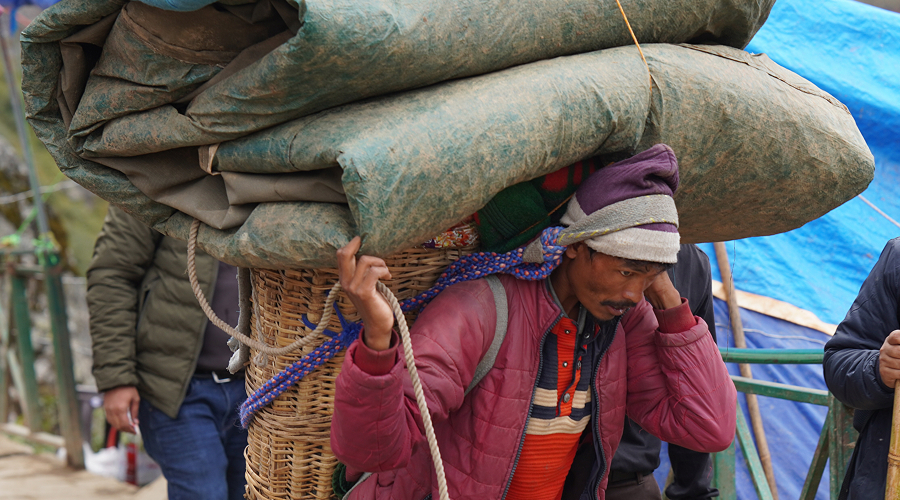
Sherpas became globally recognised during the early expeditions to Mount Everest in the twentieth century, but their relationship with the mountains long predates the arrival of foreign climbers.
When mountaineers began attempting Himalayan peaks on a larger scale, they quickly realised that local expertise was indispensable. Sherpas possessed not only physical endurance but also a practical understanding of snow conditions, route-finding, acclimatisation, and the unpredictable nature of mountain weather. In environments where small misjudgements can have serious consequences, this knowledge proved essential.
Perhaps the most famous moment in this history came in 1953, when Sherpa climber Tenzing Norgay and New Zealand mountaineer Edmund Hillary successfully reached the summit of Mount Everest. Their ascent became one of the defining milestones in the history of Himalayan exploration, bringing international recognition to the role Sherpas had already been playing for decades.
Yet even that iconic achievement only captures part of the story. Sherpas have contributed to the mapping, guiding, logistics, and safety of countless expeditions across the Himalayas. They have fixed ropes, navigated icefalls, carried supplies across dangerous terrain, and made difficult judgement calls in conditions where experience matters enormously. Many of the world’s best-known climbing achievements in Nepal would not have been possible without Sherpa knowledge, labour, and leadership.
This is why the question of who the Sherpas are should never be answered simply by saying they are mountain guides. Some are indeed highly skilled Sherpa mountain guides, but the term “Sherpa” refers first to an ethnic community, not a profession. Not every Sherpa is a guide, and reducing the identity to a job title overlooks the depth of history, culture, and community behind it.
At the same time, Sherpas remain central to the modern experience of Himalayan travel. Whether supporting ambitious trekkers, mountaineers, or travellers exploring high-altitude valleys at a gentler pace, their role continues to shape how people move through these landscapes today.
Many Sherpas grow up in villages located above 3,500 metres, where daily life naturally involves steep climbs, cold temperatures, and thin air. Over generations, this has fostered a familiarity with altitude that few visitors can easily replicate.
Their expertise is built through growing up in mountain communities, repeated exposure to local conditions, and professional guiding experience. To understand the Sherpas in the context of Himalayan travel, it is equally important to recognise the depth of practical mountain knowledge they bring.
Sherpas often have an intimate understanding of the conditions that define life at altitude: how weather can shift in a matter of hours, how snowpack changes with temperature, which routes are safest in a given season, and when it is wise to push forward or turn back. They know how to pace movement in thin air, how to read signs of fatigue, and how to adjust plans when conditions become uncertain.
For travellers, this learned expertise can transform the experience of the Himalayas. A mountain landscape that appears serene from afar can be physically demanding and logistically complex on the ground. Even non-technical journeys require careful pacing, acclimatisation, and a realistic understanding of terrain. Experienced Sherpa guides help make that navigation smoother, safer, and more intuitive.
In a luxury travel context, this matters not because travellers are looking for danger, but because they are seeking access to extraordinary places without losing the reassurance of knowledgeable support. A well-designed Himalayan itinerary should never feel rushed or precarious. It should feel calm, intelligently paced, and deeply considered. Local guidance plays a central role in making that possible.
This is also where the value of a specialist tour agency in Singapore becomes clearer. For long-haul Himalayan journeys, planning is more than just about choosing a destination. It involves altitude considerations, transport logistics, the balance between comfort and authenticity, and how to engage meaningfully with a place that is both remote and culturally distinct. Working with travel designers who understand how to pair refined planning with trusted local expertise can make the difference between simply visiting the Himalayas and experiencing them well.
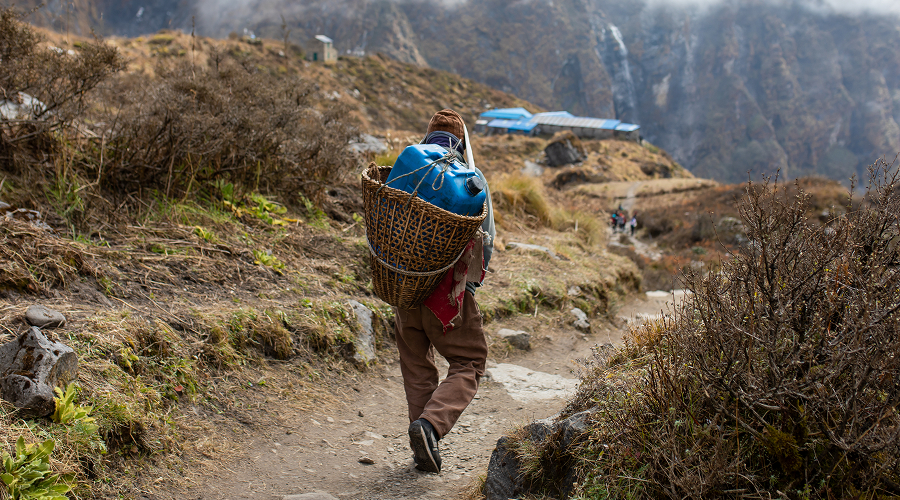
Although Sherpas are often associated with expeditions and trekking routes, their contribution to Himalayan travel extends far beyond logistics and physical support. They also serve as cultural interpreters, storytellers, and hosts who help travellers understand the region on a more human level.
Encounters with monasteries, village life, prayer rituals, local festivals, and the everyday rhythms of Himalayan communities enrich many journeys through Nepal’s mountain regions. These are not experiences that can be fully understood through scenery alone. They become far more meaningful when shared through the perspective of someone who knows the traditions, beliefs, and stories behind them.
This is where understanding the Sherpa culture becomes especially important. Sherpa guides and local hosts may explain the significance of prayer flags fluttering across a mountain pass, the role of a monastery in village life, or the spiritual reverence attached to peaks that outsiders often approach as purely physical challenges. They may introduce travellers to homes, teahouses, and community spaces that reveal how life is lived at altitude beyond the lens of adventure tourism.
Such encounters change the texture of a journey. A mountain trail becomes more than a route from one viewpoint to another. A village stop becomes more than a pause for tea. The landscape begins to feel inhabited not just by geography, but by memory, belief, and continuity.
For travellers who have already experienced or are considering luxury tours in Tibet, this cultural dimension may feel especially resonant. Across both Tibet and Nepal, the mountains are inseparable from spiritual life, monastic traditions, and communities whose identities have been shaped by altitude and faith. Sherpa insight helps illuminate those connections in ways that are difficult to access through surface-level sightseeing alone.
In this sense, the Sherpas are not only mountain professionals but also custodians of cultural context. Their presence reminds travellers that the Himalayas are not empty wilderness. They are lived-in, storied, and deeply sacred landscapes.
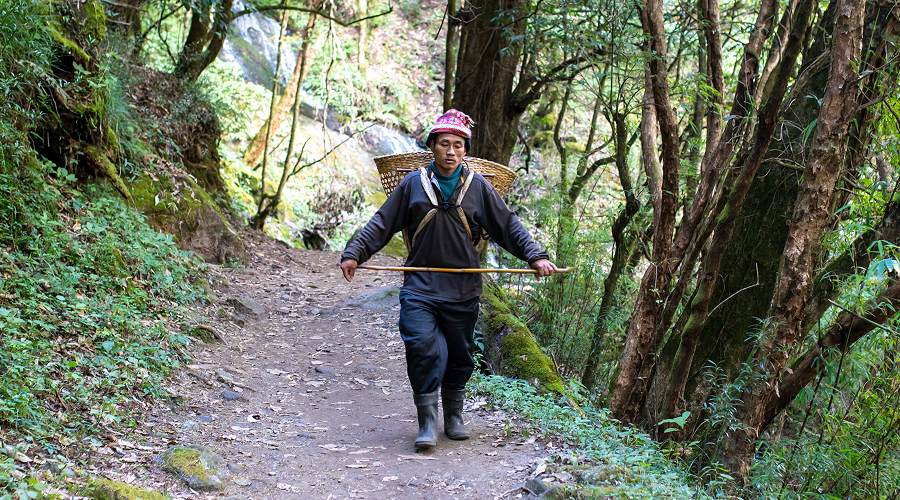
Intriq Journey approaches Himalayan travel with a strong emphasis on local expertise, careful pacing, and comfort. Rather than treating Nepal as a one-size-fits-all trekking destination, its itineraries are shaped around different travel styles and activity levels. Travellers who want to experience the Everest region, for example, can combine guided walks in the lower foothills with a helicopter flight over Everest Base Camp, while staying in comfortable lodges and exploring cultural highlights in Kathmandu and Bhaktapur. Elsewhere in Nepal, journeys such as Mustang can pair Himalayan scenery with guided visits to villages, monasteries, and Bon Buddhist sites, with hikes tailored to different levels of difficulty.
For travellers curious about Sherpas and how local expertise shapes Himalayan travel, this creates a more rewarding way to experience the region: one that balances mountain landscapes with cultural context, specialist guidance, and a pace designed around the journey itself.
Contact us to begin planning a luxury Himalayan journey shaped by the insights of those familiar with the mountains.
When many travellers picture Tibet, they imagine vast open plains, distant snow-capped mountains, and high-altitude landscapes stretching endlessly beneath an enormous sky.
Yet beneath this dramatic scenery lies another defining feature of the plateau: its river systems.
The rivers of Tibet have quietly shaped the region for thousands of years. Flowing through valleys carved into the Himalayan Plateau, they create corridors of life, movement, and settlement across one of the world’s highest inhabited regions.
These waterways do far more than transport water. They influence where communities can thrive, where crops can be cultivated, and where roads and pilgrimage routes naturally develop. For travellers crossing Tibet today, many of the landscapes encountered along the journey are inseparable from the valleys formed by these rivers.
Understanding Tibet through its river valleys reveals a richer and more nuanced view of the plateau, where geography and human history remain deeply connected.
Although Tibet is often associated with towering mountains and remote wilderness, river valleys play an equally important role in defining the region.
Many of the plateau’s most significant settlements are located along rivers. Compared to the surrounding high-altitude terrain, valley floors typically offer slightly milder conditions, more reliable access to water, and land suitable for cultivation.
Over centuries, these advantages encouraged communities to establish villages, monasteries, and trading centres along the rivers. As a result, some of Tibet’s most culturally significant locations are found within these valleys.
For travellers, the experience of moving through the Tibet river valleys often reveals an ever-changing landscape. Broad agricultural plains may suddenly give way to steep gorges, while rivers wind through mountain ranges that appear almost untouched by time.
These transitions create some of the most memorable scenery encountered across the plateau.
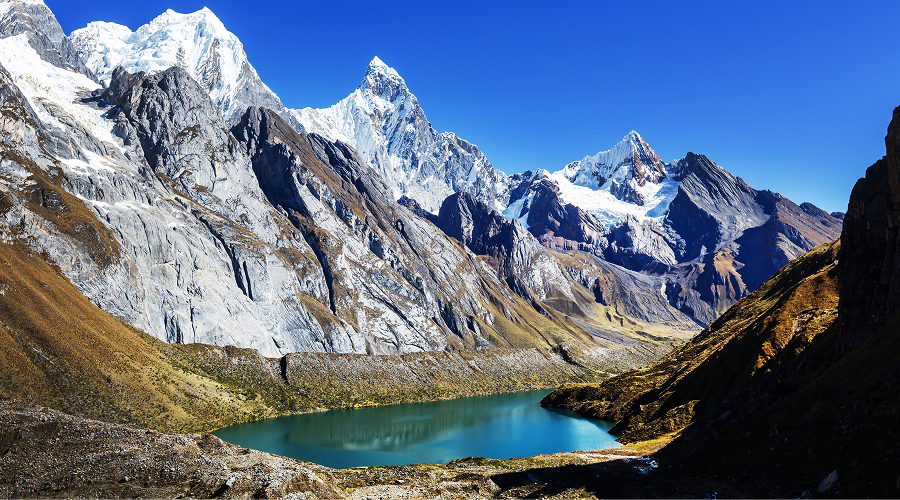
Among all the rivers of Tibet, none carries greater historical significance than the Yarlung Tsangpo River.
Originating on the Tibetan Plateau and eventually becoming the Brahmaputra River further downstream, the Yarlung Tsangpo traverses southern Tibet through a valley long regarded as the cradle of Tibetan civilisation.
The Yarlung region is closely associated with Tibet’s earliest kings and the foundations of Tibetan statehood. Many historians consider this valley one of the most important cultural landscapes in Tibetan history.
Today, travellers journeying through the area encounter wide-open plains framed by distant mountain ranges. Fields of barley and rapeseed add colour to the landscape, while traditional villages and historic religious sites reflect centuries of continuous habitation.
Several important monasteries and cultural landmarks are also located within the valley, providing valuable insight into the origins of Tibetan Buddhism and the development of Tibetan society.
The significance of the Yarlung Tsangpo River extends far beyond its physical presence. It remains a powerful symbol of the historical and cultural forces that shaped Tibet itself.
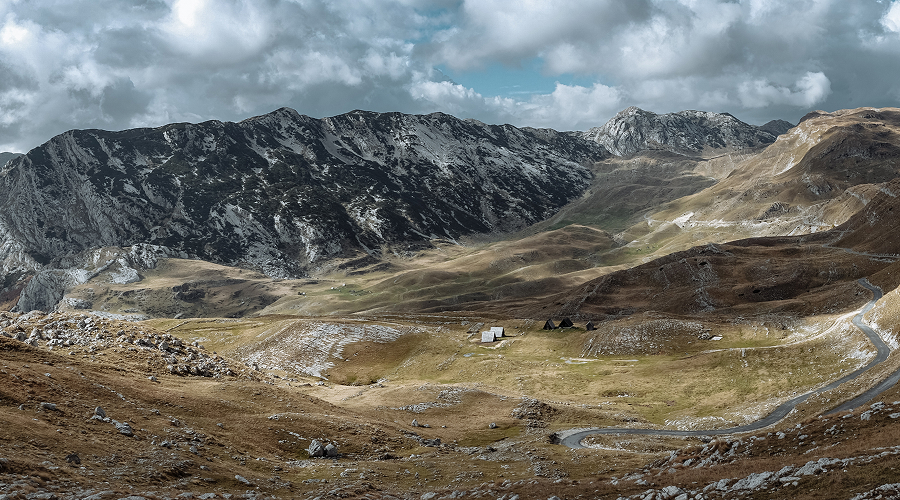
Throughout history, Tibet’s river valleys have served as natural pathways through otherwise challenging terrain.
Long before modern roads existed, traders, pilgrims, and travellers often followed river systems as they crossed the plateau. Valleys provided more navigable routes through mountainous regions, connecting Tibet with neighbouring areas including Nepal, Bhutan, India, and Central Asia.
Many of these historical corridors remain important today.
Routes leading toward western Tibet and Mount Kailash frequently follow river valleys that weave through remote landscapes before ascending toward high mountain passes. These journeys reveal how closely movement across the plateau has always been tied to geography.
For modern travellers, these routes offer far more than practical access. They provide opportunities to experience landscapes where cultural exchange, pilgrimage traditions, and trade networks once converged.
The valleys themselves become part of the story, illustrating how the Himalayan Plateau rivers have influenced both travel and civilisation for generations.
One of the most surprising aspects of Tibet’s river valleys is the contrast they create within an otherwise harsh environment.
At elevations where conditions can be challenging, rivers bring life and fertility to the landscape. Meltwater flowing from surrounding mountains nourishes fields that have sustained communities for centuries.
Barley remains one of the most important crops grown throughout Tibet, alongside wheat and other hardy grains adapted to high-altitude conditions. Villages often cluster along riverbanks where access to water supports both agriculture and daily life.
For travellers, these fertile areas frequently create some of the journey’s most memorable visual moments.
After traversing long stretches of rugged terrain, a valley may suddenly emerge below, revealing green fields, grazing yaks, and clusters of whitewashed homes beneath towering peaks.
These scenes demonstrate why the rivers of Tibet have been so essential to settlement and survival across the plateau.
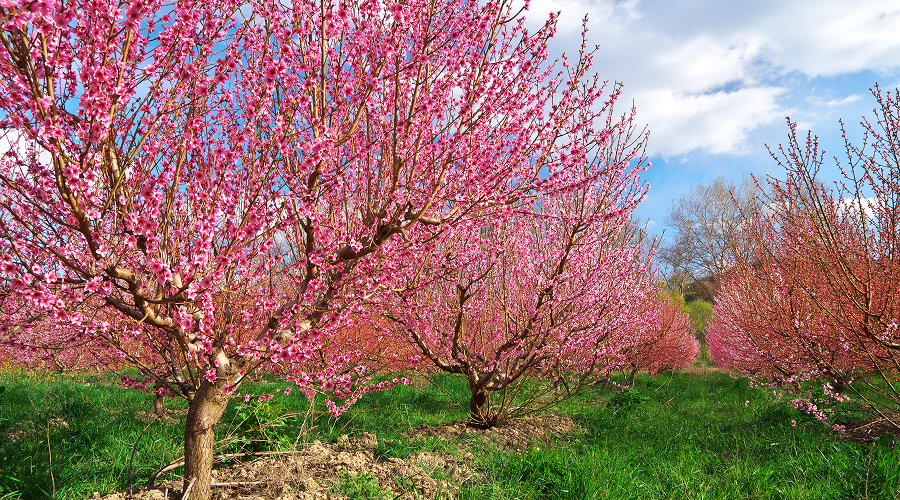
The beauty of Tibet’s river valleys is not simply a result of what the rivers sustain today. It is also a consequence of the immense geological forces that have shaped the landscape over millions of years.
As rivers cut through mountain ranges and plateaus, they gradually carve valleys, canyons, and gorges that transform the surrounding terrain.
One of the most remarkable examples is the Yarlung Tsangpo Grand Canyon. Often cited as one of the deepest canyons on Earth, it demonstrates the extraordinary power of water acting over geological timescales.
Elsewhere across Tibet, rivers continue to shape broad floodplains, winding valleys, and dramatic rock formations. These landscapes highlight the dynamic relationship between water, mountains, and time.
For travellers interested in understanding the physical geography of the Himalayas, exploring the rivers of Tibet offers a fascinating perspective on how some of Asia’s most spectacular landscapes came into existence.
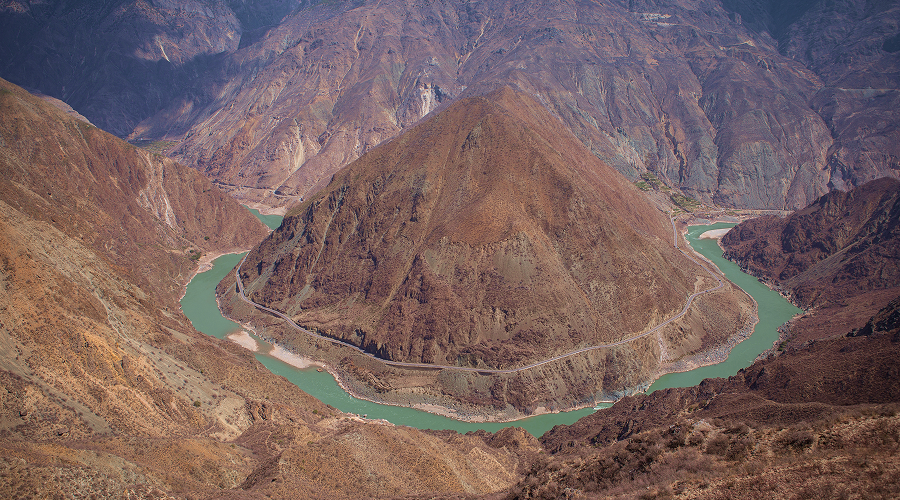
Many first-time visitors arrive in Tibet expecting only mountain scenery. While the Himalayas undoubtedly dominate the skyline, it is often the valleys that provide the most intimate encounters with daily life.
Travelling through river corridors allows visitors to experience traditional villages, agricultural communities, historic monasteries, and sacred sites that have developed alongside these waterways for centuries.
These journeys also reveal the remarkable diversity of the Tibetan landscape. Wide plains, fertile farmland, dramatic gorges, and remote mountain scenery can all be encountered within a single itinerary.
For travellers seeking a deeper understanding of the region, the river valleys provide context that complements Tibet’s spiritual and cultural landmarks.
Much like travellers who explore ancient civilisations through carefully curated luxury tours, those journeying through Tibet’s valleys gain a richer appreciation of how geography influences culture, belief systems, and everyday life.
Travelling through Tibet’s river valleys is about far more than moving between scenic viewpoints. The distances are vast, elevations change throughout the journey, and many of the region’s most rewarding cultural experiences are found beyond the main tourist routes.
Luxury travel enhances the experience through thoughtful planning and pacing. Rather than rushing between destinations, travellers have time to acclimatise, absorb the changing landscapes, and appreciate the historical and cultural significance of each region. This is particularly valuable when exploring the waterways of Tibet, where valleys often reveal layers of history that are not immediately visible to the casual observer.
At Intriq Journey, our itineraries are designed to connect travellers with the stories behind the scenery. Expert local guides provide insight into how waterways such as the Yarlung Tsangpo River shaped settlement patterns, agricultural communities, trade routes, and religious centres across the plateau. What might appear to be a beautiful valley becomes a deeper exploration of Tibetan civilisation itself.
As a specialist tour agency in Singapore for luxury cultural travel, Intriq Journey also places strong emphasis on seamless logistics and personalised service. From carefully paced routing and accommodation selection to expert on-the-ground coordination, every element is designed to help travellers experience Tibet’s remarkable landscapes with greater comfort, understanding, and ease.
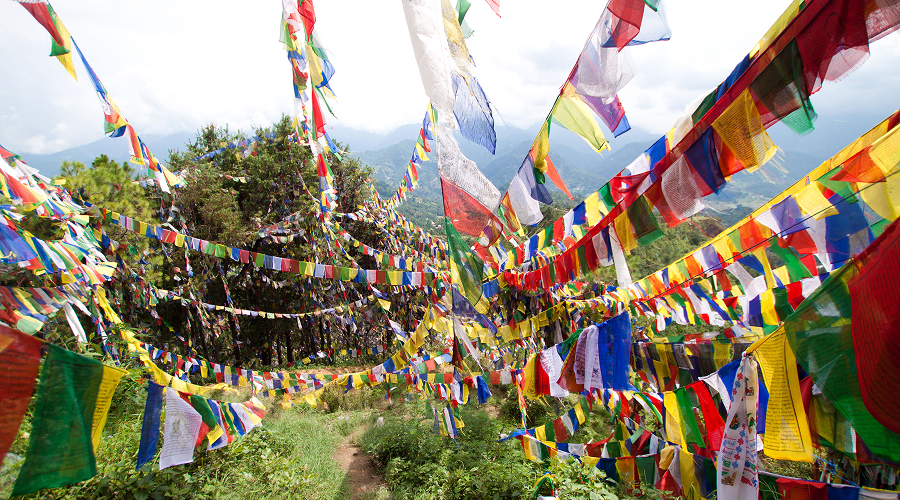
The rivers of Tibet do more than shape the landscape. They reveal the foundations of Tibetan civilisation, sustain communities across the plateau, and connect some of the region’s most significant historical, cultural, and spiritual sites.
Whether flowing through fertile valleys, remote high-altitude plains, or dramatic Himalayan gorges, these waterways offer a unique perspective on Tibet that extends beyond its famous mountains and monasteries. Following their paths allows travellers to better understand the relationship between geography, culture, and daily life on the plateau.
For travellers seeking to explore Tibet through its landscapes and stories, the river valleys offer some of the most rewarding journeys in the region.
Contact us to begin planning your luxury journey to Tibet’s rivers and waterways.
Across the remote western reaches of Tibet stands a mountain that has shaped spiritual imagination for centuries. Rising to approximately 6,675 metres above sea level, Mount Kailash appears almost impossibly composed, its snow-lined ridges forming a striking pyramid against the wide, wind-brushed sky.
For travellers researching famous mountains in Tibet, Mount Kailash often emerges as the most remarkable. Yet its power does not come from height alone. It is not the tallest mountain in Tibet, nor is it celebrated in the same way as Everest, where climbers measure achievement by reaching the summit.
Mount Kailash belongs to a different order of meaning.
It is a mountain approached through devotion rather than conquest. For centuries, pilgrims have crossed vast distances to stand before it, circle it, pray before it, and absorb the quiet gravity of its presence. Its slopes remain unclimbed not because they are unseen, but because they are revered.
In a world where mountains are often treated as challenges to overcome, Mount Kailash is a reminder that some places are powerful precisely because they ask us to pause, lower our voice, and look with humility.
Mount Kailash is widely considered one of the sacred mountains that Tibet is most known for, yet its significance extends far beyond Tibetan culture alone. It occupies a rare spiritual position across several major religious traditions, each of which sees the mountain as a place of cosmic importance.
In Tibetan Buddhism, Mount Kailash is associated with Demchok, also known as Chakrasamvara, a deity linked with supreme bliss and enlightenment. The surrounding landscape is often understood through sacred mandala symbolism, where the mountain and its valleys form part of a larger spiritual geography.
In Hinduism, Mount Kailash is revered as the home of Lord Shiva and his consort Parvati. Devotees often view it as the earthly manifestation of Mount Meru, the mythic centre of the universe. To stand before Kailash is, for many, to come close to a divine axis that connects heaven and earth.
For followers of Jainism, the mountain is associated with Rishabhadeva, the first Jain Tirthankara, who is believed to have attained spiritual liberation there. Meanwhile, practitioners of Bon, Tibet’s ancient pre-Buddhist spiritual tradition, regard the mountain as a seat of immense spiritual power and mystical energy.
These overlapping beliefs explain why Mount Kailash has long drawn pilgrims from across Asia. A traveller may first encounter it as a famous mountain in Tibet, but the closer one looks, the more it reveals itself as a universal sacred symbol.
One of the most extraordinary things about Mount Kailash is that it remains unclimbed. There is no confirmed summit ascent, and this absence has become part of the mountain’s identity.
For many of the world’s great peaks, fame is tied to mountaineering history. Records are set. Routes are named. Climbers test themselves against altitude, weather, and danger.
Mount Kailash resists that language entirely.
Its sacred status has led religious communities and authorities to discourage climbing to respect its spiritual significance. Over the years, mountaineers have occasionally expressed interest in attempting the summit, but such plans have been abandoned due to cultural and ethical considerations.
This restraint is central to understanding Mount Kailash. It is not treated as a challenge to conquer, but as a sacred presence to honour. In that sense, the mountain’s untouched summit may be one of its most powerful statements.
For travellers looking for famous mountains in Tibet, this can feel striking. Mount Kailash is not famous because humanity has stood atop it. It is famous because generations have chosen not to.
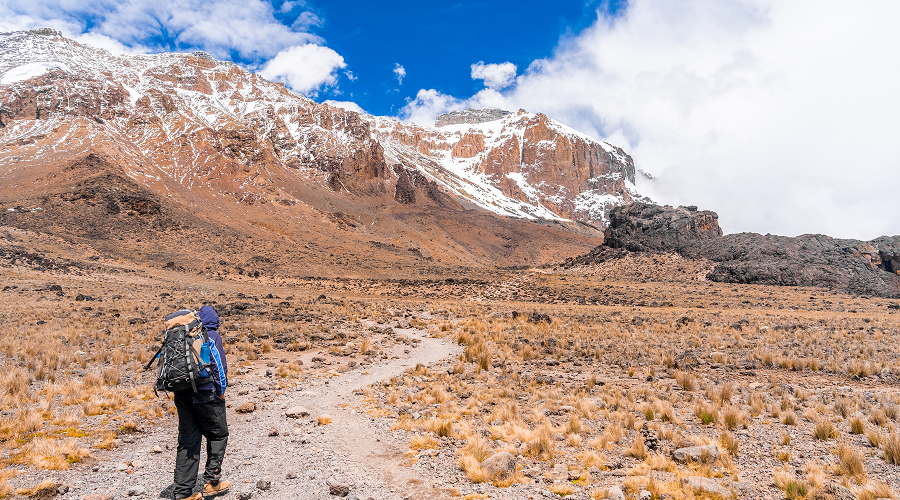
The heart of the Mount Kailash pilgrimage is the kora, a ritual circuit around the mountain. Instead of ascending its slopes, pilgrims walk around its base in a circular journey of devotion, purification, and reflection.
The route covers approximately 52 kilometres and is typically completed over three days by travellers and pilgrims. The path passes through remote valleys, open plains, river crossings, prayer-flag-covered sites, and high mountain terrain. Its most demanding point is Dolma La Pass, which rises to more than 5,600 metres above sea level.
For pilgrims, the kora is not merely a physical route. It is an act of spiritual intention.
Some walk quietly while turning prayer beads and reciting mantras. Others perform full-body prostrations along the route, lowering themselves to the earth, rising again, then moving forward only a short distance before repeating the gesture. What might take one traveller three days can take a prostrating pilgrim far longer.
The rhythm of the pilgrimage is humbling. It turns the mountain into something slowly encountered rather than quickly consumed. Every step becomes part of an inward journey.
For those who come to Tibet through luxury Tibet tours, the experience need not diminish the mountain’s solemnity. At its best, a carefully curated journey allows travellers to approach Mount Kailash with the right preparation, cultural understanding, and respect for the spiritual atmosphere surrounding the pilgrimage.
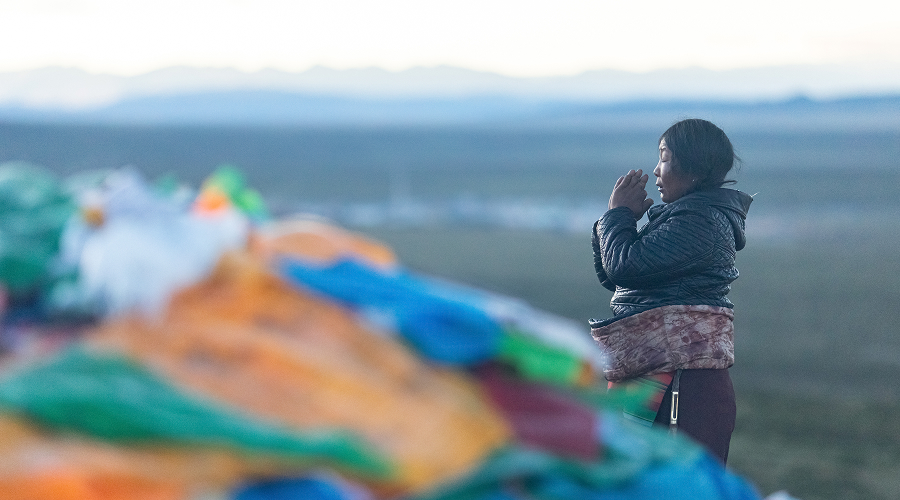
The Kailash Kora trek is one of the most meaningful journeys in Tibet, but it also requires careful preparation. The route’s spiritual significance can sometimes overshadow its physical demands, especially for first-time travellers to the Tibetan Plateau.
The terrain is remote and exposed. Weather conditions can shift quickly. Altitude is a major consideration, particularly around Dolma La Pass, where the air becomes thin and every movement requires more effort. Even experienced travellers may find the route demanding if they are not properly acclimatised.
This is why pacing matters.
A well-planned journey to Mount Kailash should not rush towards the kora. Travellers benefit from gradual acclimatisation, time to adjust to the plateau, and a route that accounts for rest, hydration, and altitude awareness. The journey across western Tibet is long, and the region’s remoteness makes careful logistics essential.
Yet the difficulty is part of what gives the kora its emotional weight. The landscape does not offer easy drama. It reveals itself slowly through bare earth, distant ridgelines, stone shelters, wind-bent prayer flags, and moments of silence that feel almost ceremonial.
For travellers researching popular mountains in Tibet, the Kailash Kora offers far more than scenic trekking. It is a physical passage through a sacred landscape, where endurance and reverence meet.
Mount Kailash does not stand alone in spiritual imagination. The wider region around it forms an entire sacred geography, shaped by mountains, lakes, valleys, and pilgrimage routes.
Nearby lies Lake Manasarovar, one of the highest freshwater lakes in the world. Its waters are revered for their purity, and many pilgrims bathe or perform rituals along its shores as part of their spiritual journey. On clear days, the lake reflects the surrounding mountains with a stillness that feels almost unreal.
Beside it lies Lake Rakshastal, a darker and more austere body of water whose stark beauty contrasts with the serenity of Manasarovar. Together, the two lakes create a landscape of dualities: purity and mystery, softness and severity, reflection and shadow.
This broader setting helps explain why Mount Kailash is not simply seen as a single peak. It is part of a sacred world where geography and belief are inseparable.
Travellers who have experienced other cultural routes through Asia may find this especially compelling. The sense of layered history, spiritual exchange, and remote overland movement often resonates with those drawn to luxury Silk Road tours, where landscapes are understood not just as destinations, but as corridors of civilisation, faith, and memory.
In western Tibet, that feeling is intensified. The land seems stripped back to its most elemental form. The sky feels vast. Distances feel ancient. The mountain rises not as an isolated object, but as the centre of a living spiritual map.
There are many reasons travellers are drawn to Tibet: monasteries, plateau landscapes, ancient cities, high-altitude lakes, and the quiet intensity of Tibetan Buddhist culture. Yet Mount Kailash holds a distinctive place within this world.
It is remote enough to feel almost mythical, yet present enough to leave a lasting impression. It is visually arresting, yet its deepest meaning cannot be captured by appearance alone. It is a popular mountain in Tibet, but its fame is rooted in something far older than travel photography or modern adventure.
Part of its appeal lies in the contrast between simplicity and magnitude. From a distance, the mountain appears still and silent. Around it, however, centuries of prayer, pilgrimage, myth, and devotion continue to move. This combination gives Mount Kailash a rare emotional force.
For some travellers, the journey is religious. For others, it is cultural, philosophical, or deeply personal. Even those who do not share the beliefs associated with the mountain often sense that they are entering a place shaped by reverence.
That is what makes Mount Kailash different. It does not need to be explained entirely to be felt. Its presence works quietly, often long after the journey has ended.
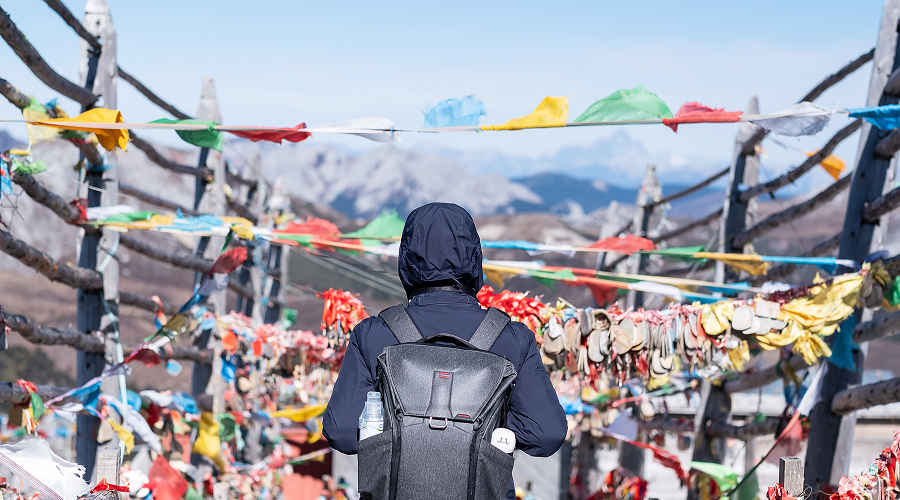
A journey to Mount Kailash should be approached with sensitivity. This is not a destination defined by spectacle alone. It is a living pilgrimage site, and travellers share the landscape with people who may have saved for years or travelled across great distances to complete the kora.
Respect begins with awareness. Photography should be approached with care, especially around pilgrims performing rituals or prostrations. Sacred sites should be treated with restraint. Prayer flags, mani stones, monasteries, and ritual objects are not decorative props, but part of a devotional world.
Physical preparation is equally important. The region’s altitude and remoteness demand realistic expectations. Travellers should allow time for acclimatisation and be prepared for weather, road conditions, and local requirements to affect the journey.
A thoughtful itinerary also makes space for context. Mount Kailash is most meaningful when travellers understand the beliefs, rituals, and histories that surround it. Expert local guidance can help interpret the landscape without flattening its mystery.
For travellers seeking a famous mountain in Tibet, the goal should not be to simply arrive, take photographs, and move on. The greater reward lies in slowing down enough to understand why the mountain matters.
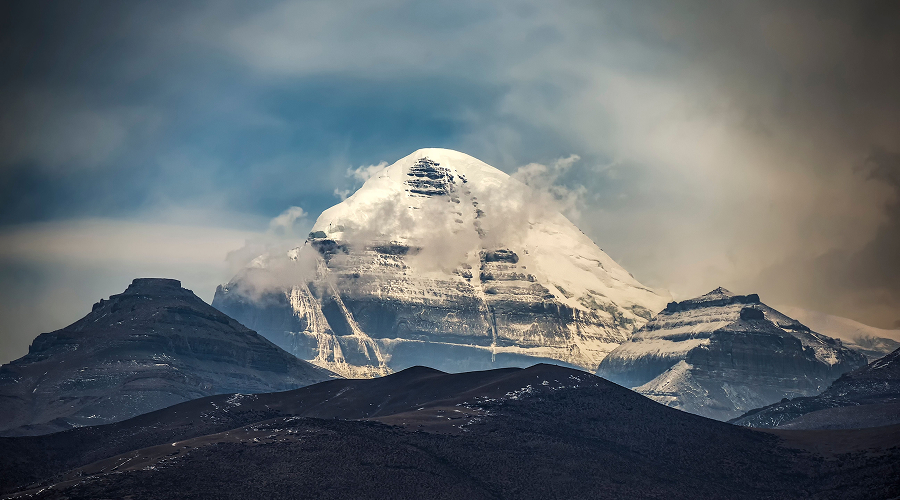
Reaching Mount Kailash requires more than a standard travel plan. The region lies in one of Tibet’s most remote areas, where altitude, distance, terrain, permits, and cultural considerations all shape the journey. A meaningful experience depends on thoughtful pacing, careful preparation, and a deep respect for the sacred nature of the landscape.
At Intriq Journey, we curate journeys that allow travellers to encounter Tibet with both comfort and cultural depth. In the context of Mount Kailash, this means designing itineraries that move carefully across the plateau, allowing time for acclimatisation, scenic overland travel, and guided insights into the spiritual traditions surrounding the mountain.
The experience may include vast drives across the Tibetan Plateau, visits to sacred lakes, encounters with pilgrimage routes, and the profound sight of devotees circling one of the world’s most revered peaks. Each detail is considered so the journey feels neither rushed nor superficial, but layered, sensitive, and deeply memorable.
For travellers seeking to understand a mountain that has held spiritual significance for centuries, Mount Kailash offers one of the most extraordinary journeys on Earth.
Contact us to begin planning a carefully curated journey to one of the world’s most sacred mountains.
For travellers arriving from Singapore, few destinations feel as profoundly different as Tibet.
Singapore’s skyline rises through glass, steel, and commerce. Lhasa’s skyline, by contrast, is shaped by golden rooftops, monastery walls, and prayer flags fluttering against an immense mountain sky. Here, spirituality is not confined to sacred buildings or special occasions. It is woven into everyday life.
For centuries, travellers approaching Lhasa described the city not simply as a political capital, but as a destination of pilgrimage. Monks, traders, nomads, and devotees crossed some of the world’s most challenging terrain to reach this high-altitude sanctuary, where faith shaped the rhythm of society.
Today, exploring the city through a guide to Lhasa monasteries reveals why it remains the spiritual heart of Tibet. Ancient institutions continue to influence daily life, while rituals practised for centuries remain deeply embedded within the city’s identity.
Prayer wheels turn steadily in temple corridors. Butter lamps flicker before sacred statues. Pilgrims move through ancient courtyards with quiet determination, reciting mantras passed down through generations.
Lhasa is not merely a place to learn about Tibetan Buddhism.
It is where the tradition continues to live.
Lhasa’s significance extends far beyond its role as a capital city.
For centuries, it served as the centre of religious authority throughout Tibet, home to influential monasteries, revered temples, and some of the most important figures in Tibetan Buddhism. Pilgrims travelled vast distances to seek blessings, study sacred teachings, and participate in important religious festivals.
The city’s monasteries became more than places of worship. They evolved into centres of philosophy, education, medicine, art, literature, and governance. Many of Tibet’s greatest scholars and spiritual leaders emerged from these institutions, shaping the development of Tibetan Buddhism across the region.
Understanding Lhasa monasteries, therefore, provides a deeper understanding of Tibet itself. Their influence can still be felt throughout the city, from the daily routines of local residents to the sacred traditions that continue to draw pilgrims from across the plateau.
Among all the sacred sites in Tibet, none commands greater reverence than the Jokhang Temple in Lhasa.
Founded in the 7th century during the reign of King Songtsen Gampo, the temple occupies both the physical and spiritual centre of the city. For more than a millennium, it has remained the most important pilgrimage destination in Tibetan Buddhism.
Many visitors first notice the extraordinary devotion surrounding the temple before they even enter. Pilgrims arrive from every corner of Tibet. Some have travelled for months. Others perform full-body prostrations as part of their spiritual journey before finally reaching the temple gates.
Inside, the atmosphere changes immediately.
Ancient corridors glow with the light of countless butter lamps. The scent of incense fills the air. Darkened walls bear the marks of centuries of prayer, while worshippers move quietly between sacred shrines.
At the heart of the temple stands the revered Jowo Shakyamuni statue, believed by many Tibetans to be the most sacred image of the Buddha in existence.
For pilgrims, a visit to Jokhang represents a profound spiritual milestone. For travellers, it offers an intimate glimpse into a living tradition of devotion that continues to define Tibetan culture today.
Within any guide to Lhasa monasteries, Jokhang Temple remains the spiritual centre from which the city’s religious life radiates.
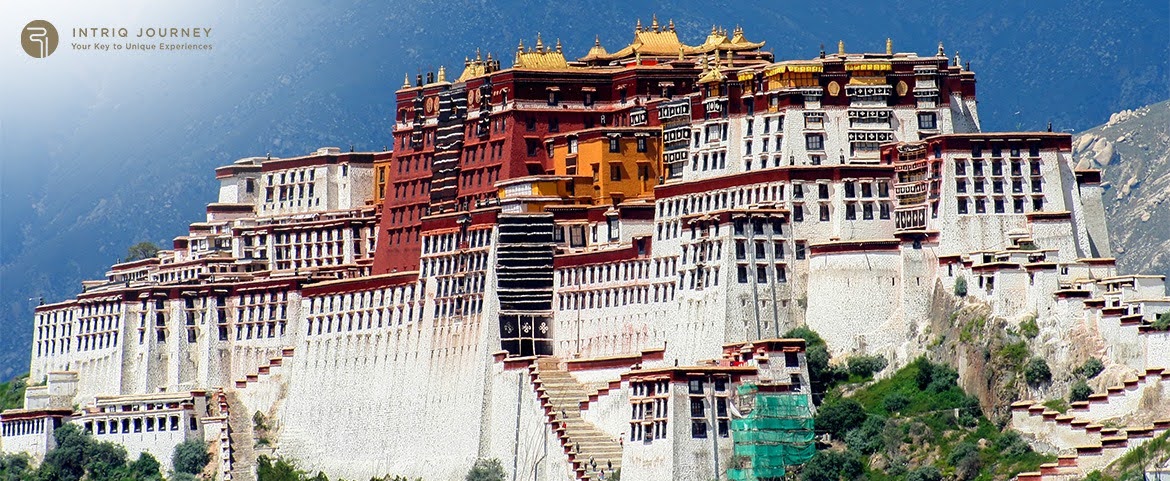
Few landmarks are as instantly recognisable as Potala Palace.
Rising dramatically above Lhasa from Red Hill, the palace appears almost suspended between earth and sky. Its immense white walls and crimson towers dominate the landscape, creating one of the most iconic images in Asia.
For centuries, Potala Palace served as the winter residence of successive Dalai Lamas. It functioned as both a spiritual centre and the administrative heart of Tibet, bringing together religious authority and political leadership under one roof.
The scale of the complex is remarkable.
Visitors ascend steep staircases into a labyrinth of chapels, meditation halls, ceremonial chambers, sacred stupas, and repositories of religious art. Priceless manuscripts, elaborate thangkas, and gilded statues provide insight into centuries of Tibetan history and spiritual practice.
Yet despite its grandeur, Potala Palace retains a deeply contemplative atmosphere.
As visitors move through its sacred spaces, the palace reveals itself not merely as a historical monument, but as a powerful symbol of Tibet’s spiritual legacy and cultural identity.
No exploration of Lhasa monasteries would be complete without understanding the central role Potala Palace played in shaping Tibetan civilisation.
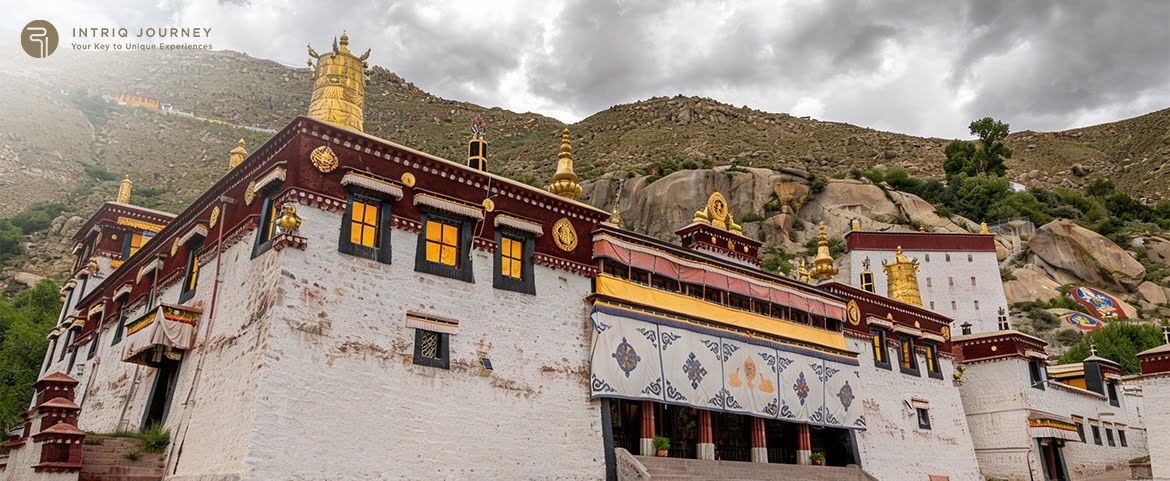
While Jokhang Temple embodies devotion and Potala Palace symbolises leadership, Sera Monastery reveals another important dimension of Tibetan Buddhism: intellectual inquiry.
Founded in the 15th century, Sera became one of Tibet’s foremost monastic universities. For generations, monks dedicated themselves to the study of Buddhist philosophy, ethics, logic, and scripture within its walls.
Today, visitors are often drawn by the famous Sera Monastery debate sessions held each afternoon.
Within a shaded courtyard, monks gather in pairs or groups to engage in vigorous philosophical discussions. Questions are delivered rapidly. Responses are challenged. Hands clap sharply to punctuate arguments and test reasoning.
To first-time observers, the debates can appear almost theatrical.
Yet every movement serves a purpose.
The debates form part of a centuries-old educational tradition designed to strengthen critical thinking and deepen understanding of complex philosophical concepts.
Witnessing a debate at Sera Monastery often challenges common perceptions of monastic life. Rather than passive contemplation alone, visitors encounter a vibrant intellectual culture that values rigorous analysis alongside spiritual practice.
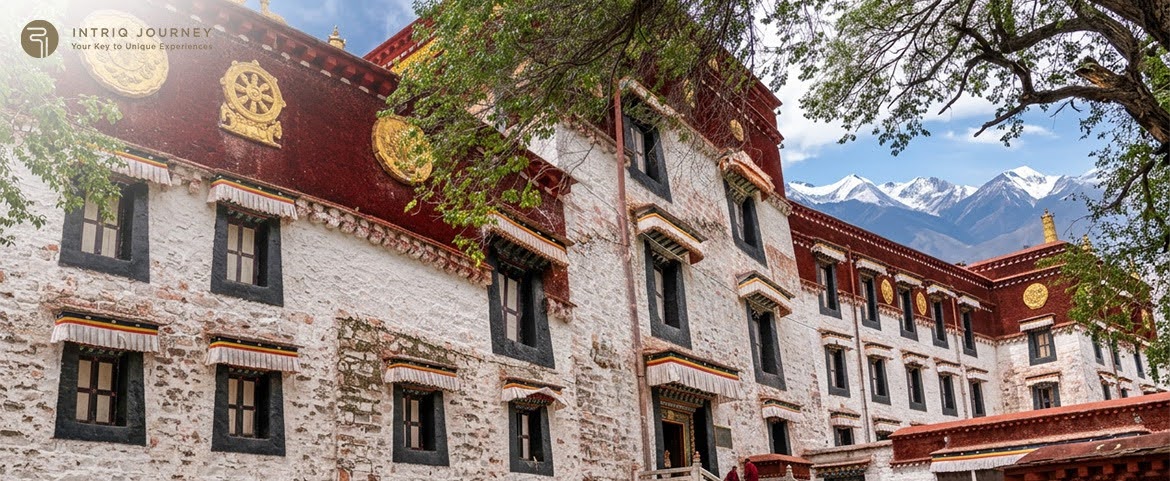
Situated on the mountainside west of Lhasa, Drepung Monastery was once considered the largest monastery in the world.
At its height, thousands of monks lived, studied, and practised within its vast complex. The monastery became one of the most influential centres of Buddhist learning in Tibet and played a major role in shaping religious scholarship throughout the region.
From afar, its whitewashed buildings appear to cascade down the hillside like a frozen river of stone.
Walking through its courtyards today offers insight into the immense scale of monastic life that once flourished here. Assembly halls, chapels, libraries, and residential quarters reveal the complexity of an institution that functioned as both a spiritual community and an academic centre.
Together with Jokhang Temple, Potala Palace, and Sera Monastery, Drepung forms an essential part of understanding Lhasa’s spiritual landscape.
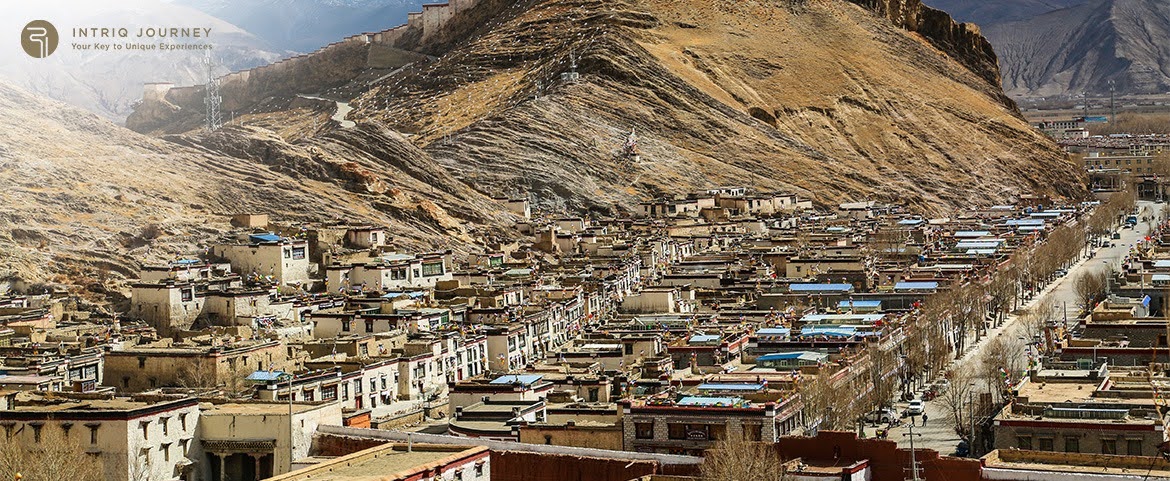
Although often viewed primarily through the lens of Tibetan Buddhism, Lhasa has long occupied an important position within wider networks of cultural exchange across Asia.
For centuries, merchants, pilgrims, scholars, and spiritual teachers travelled between Tibet, Central Asia, India, Nepal, and China, carrying ideas, artistic influences, and religious teachings across immense distances. These exchanges helped shape many of the monasteries that visitors encounter today.
The architecture, artworks, sacred texts, and philosophical traditions preserved within Lhasa’s monasteries reflect centuries of interaction with neighbouring cultures.
For travellers fascinated by the cultural forces that shaped Tibet, the story does not end at the plateau’s borders. Across Asia, ancient trade routes carried not only goods but also religious teachings, artistic influences, and philosophical ideas between distant civilisations.
This broader narrative can be explored through luxury Silk Road tours, where travellers encounter many of the same themes of cultural exchange, spiritual discovery, and historical connection that helped shape the monasteries and sacred traditions of Lhasa.
Not all sacred experiences in Lhasa take place within monastery walls.
One of the most moving expressions of Tibetan spirituality can be found along the famous Barkhor Street pilgrimage route that encircles Jokhang Temple.
From dawn until late evening, a continuous stream of pilgrims moves clockwise around the sacred circuit. Prayer wheels spin gently in their hands. Prayer beads pass rhythmically through their fingers. Softly spoken mantras blend with the sounds of daily life.
For many Tibetans, completing this pilgrimage is an act of devotion, merit-making, and spiritual reflection.
For visitors, it provides a rare opportunity to witness faith expressed not through formal ceremony but through everyday movement.
The route itself is lined with traditional shops selling prayer flags, incense, religious artefacts, and handcrafted goods. Yet despite its commercial activity, the atmosphere remains unmistakably sacred.
The Barkhor is more than a street.
It is a living ritual that has connected generations of pilgrims to the spiritual heart of Lhasa.
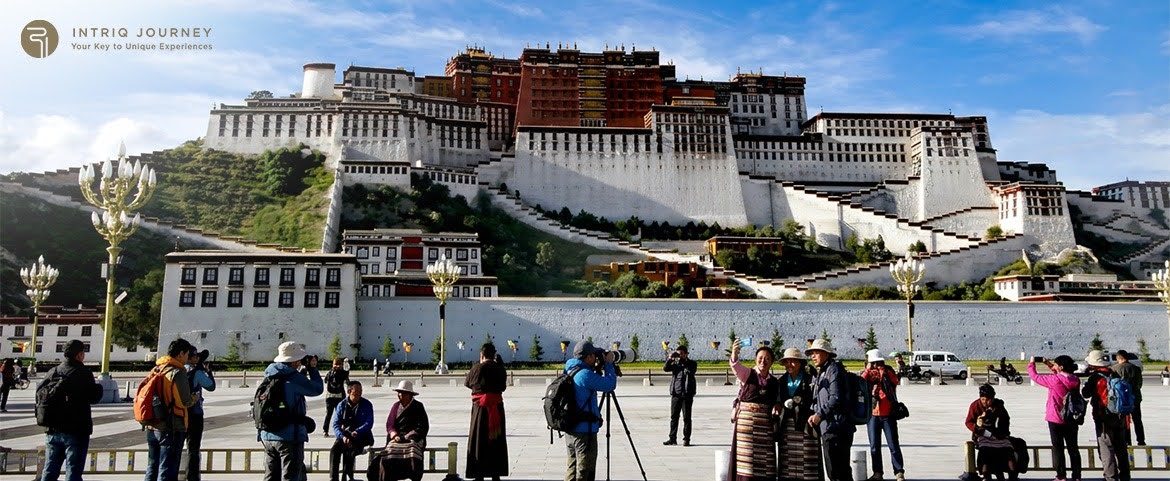
Many visitors arrive expecting to see historic buildings.
They leave with something far more profound.
The monasteries of Lhasa reveal how spirituality can shape an entire civilisation. Within these sacred spaces, religion intersects with philosophy, art, architecture, education, and community life.
Travellers gain insight into a worldview that values compassion, mindfulness, wisdom, and interdependence. They encounter traditions that have endured through centuries of change while remaining deeply relevant to contemporary Tibetan culture.
More importantly, they witness Tibetan Buddhism not as a relic of history, but as a living practice woven into everyday life.
For many travellers, these experiences become the defining moments of thoughtfully designed luxury Tibet tours, where meaningful cultural encounters are balanced with the practical considerations of travelling on the Tibetan Plateau.
Time is intentionally built into the journey for gradual acclimatisation, while carefully paced days allow travellers to move between monasteries without feeling hurried.
The result is a more immersive experience, creating space to absorb the atmosphere of sacred sites, witness daily devotional practices, and engage more deeply with Tibet’s living spiritual traditions.
This is what makes exploring the monasteries of Lhasa such a rewarding experience.
The journey extends beyond sightseeing into a deeper understanding of one of the world’s most distinctive spiritual traditions.
Exploring Lhasa’s monasteries requires more than visiting historic landmarks. These sacred institutions preserve centuries of philosophy, devotion, scholarship, and cultural tradition, offering rare insight into one of the world’s most enduring spiritual civilisations.
At Intriq Journey, we believe meaningful travel begins with understanding. Our carefully curated Tibet journeys are designed to reveal the stories behind each monastery, temple, and pilgrimage route through expert guidance, thoughtful pacing, and immersive cultural experiences.
Whether witnessing monks engaged in philosophical debate, joining pilgrims along the Barkhor circuit, or standing before the sacred halls of Jokhang Temple, travellers gain a deeper appreciation of the traditions that continue to shape Tibetan life today.
If you are considering a journey to Tibet, contact us to begin planning a bespoke itinerary tailored to your interests, travel style, and aspirations. Through thoughtful exploration and expert insight, the spiritual heart of Tibet reveals itself in ways that remain long after the journey ends.
For travellers arriving from Singapore, Mongolia can feel almost unimaginable.
One is a city-state defined by vertical skylines, carefully planned infrastructure, and constant movement. The other unfolds horizontally, stretching towards horizons so distant they seem to dissolve into the sky itself. Roads become tracks. Boundaries disappear. Silence becomes part of the landscape.
It is within these immense grasslands that one of the world’s oldest and most enduring relationships between people and animals continues to thrive.
To experience Mongolia on horseback is to encounter the country in its most natural state. Long before paved roads and modern transport, horses connected communities, sustained livelihoods, and helped shape the course of history.
Today, they remain woven into the fabric of everyday life, carrying herders across vast distances and serving as living symbols of freedom, resilience, and identity.
For travellers seeking adventures beyond conventional sightseeing, riding alongside local horsemen offers an opportunity to experience Mongolia not as an observer, but as a participant in a tradition that has endured for centuries.
Few countries are as inseparable from horses as Mongolia.
Across the centuries, horses have influenced how people travelled, communicated, hunted, traded, and survived. Entire generations were raised in the saddle, learning to ride almost as soon as they could walk.
This profound connection is often viewed as the foundation of Mongolian nomadic horse culture, which continues to define the nation’s identity today.
The relationship extends far beyond practicality.
For many Mongolians, horses represent freedom across open landscapes. They symbolise independence, mobility, and harmony with the natural world. Stories, songs, poetry, and legends frequently place horses at the centre of the narrative, reflecting their significance not merely as animals but as companions through life’s journey.
The influence of horses can be felt everywhere across the countryside. They graze freely across endless grasslands, gather near family gers, and accompany herders as they move livestock between seasonal pastures.
Even in the modern era, the horse remains one of Mongolia’s most enduring cultural symbols.
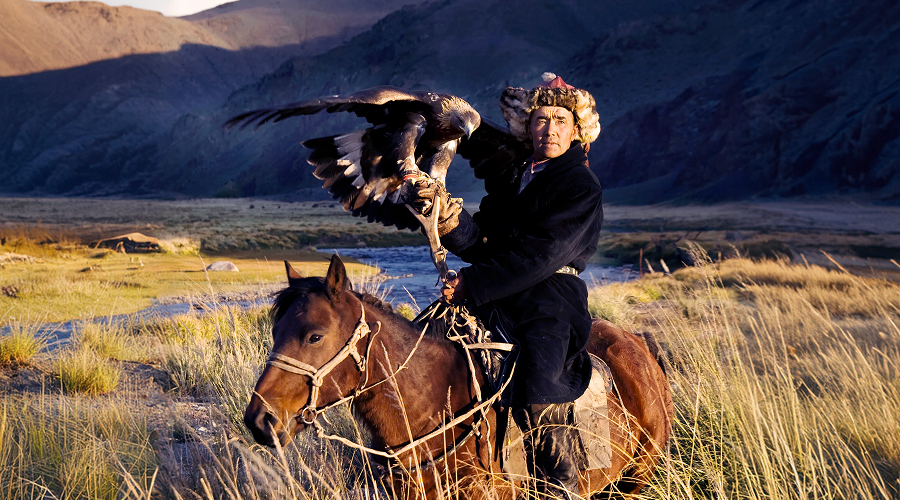
Any discussion of Mongolia’s horse culture inevitably leads back to one of history’s most influential figures: Genghis Khan.
The rise of the Mongol Empire was made possible not only by military strategy but also by the extraordinary capabilities of Mongolian horsemen and their horses.
Unlike larger breeds found elsewhere, Mongolian horses possessed exceptional endurance. Riders could travel remarkable distances each day, often changing mounts multiple times during long journeys. This mobility enabled communication networks and military campaigns that transformed the course of world history.
Yet the true legacy of these horsemen extends beyond conquest.
Their knowledge of terrain, weather patterns, animal behaviour, and seasonal migration laid the foundations for a way of life that continues across Mongolia’s countryside today. Modern nomadic families still rely on many of the same horsemanship skills passed down through generations.
Travellers who explore Mongolia on horseback often discover that this historical legacy feels surprisingly alive. It is not preserved behind museum glass. It remains visible across the steppe every day.
At first glance, the Mongolian horse may appear modest compared to larger European breeds.
It is typically shorter, stockier, and more rugged in appearance. Yet these characteristics are precisely what make it perfectly suited to Mongolia’s demanding environment.
The country experiences some of the world’s most dramatic seasonal contrasts. Summer temperatures can be intensely warm, while winter conditions may plunge far below freezing. Strong winds sweep across exposed grasslands, and food sources can become scarce during harsh seasons.
Over thousands of years, the Mongolian horse evolved to thrive within these conditions.
Its strengths include:
Unlike horses in many other countries, Mongolian horses often spend the entire year outdoors. They roam freely, developing instincts and stamina that allow them to survive with minimal intervention.
For travellers embarking on horseback riding across the Mongolian steppe, these qualities become immediately apparent. The horses move confidently across rivers, hills, valleys, and open grasslands with a calm reliability that reflects centuries of adaptation.
There is a unique sensation that emerges after several hours of riding through Mongolia.
The usual markers of modern travel begin to disappear.
There are no traffic lights, no crowds, and often no visible roads. The landscape unfolds in every direction without interruption. Distances are measured less by kilometres and more by natural landmarks, weather patterns, and the rhythm of the horse beneath you.
Many travellers who typically gravitate towards curated luxury tours find that Mongolia offers a different kind of exclusivity. Here, the luxury lies not in excess, but in access to vast open spaces, meaningful cultural encounters, and landscapes that remain largely untouched by mass tourism.
This is where horseback riding across the Mongolian steppe becomes something more than an activity.
It becomes a different way of experiencing time.
Travellers often spend entire days traversing rolling grasslands, crossing mountain passes, and following routes known primarily to local guides. The pace naturally slows. Attention shifts towards the subtle details of the landscape: shifting clouds, distant herds, wildflowers emerging across valleys, and the changing colours of the horizon.
Unlike conventional itineraries where destinations dominate the journey, horseback travel in Mongolia often reveals that the journey itself is the destination.
One of the most rewarding aspects of travelling in Mongolia on horseback is the opportunity to learn directly from local horsemen.
These riders possess generations of knowledge that cannot be found in guidebooks.
Their understanding of the land extends far beyond navigation. They read weather changes from distant cloud formations. They recognise grazing patterns. They understand seasonal migrations and know where herds are likely to be found across immense stretches of countryside.
Travellers frequently observe how horsemen communicate with their horses using subtle movements and quiet cues rather than force.
There is a mutual familiarity that reflects years of partnership.
Conversations during these journeys often reveal fascinating insights into nomadic life, family traditions, seasonal movements, and the challenges of maintaining traditional lifestyles in a rapidly changing world.
For many visitors, these interactions become the most memorable aspect of the journey.
Away from popular tourist routes, travellers may also encounter the daily realities of traditional Mongolian horse herding.
This remains an essential part of life for many nomadic families.
Horse herding involves far more than simply managing animals. It requires a deep understanding of grazing conditions, weather systems, breeding practices, and seasonal migration patterns.
At certain times of the year, herders gather horses across enormous areas of open land. Watching skilled riders guide dozens or even hundreds of animals across the steppe offers a powerful glimpse into a way of life that has remained remarkably consistent across generations.
These moments often provide travellers with a greater appreciation for the complexity of nomadic culture.
What appears effortless is actually the result of lifelong expertise.
Horse culture in Mongolia extends far beyond transportation.
Its influence can be found throughout music, spirituality, folklore, and artistic expression.
One of the most recognisable cultural symbols is the Morin Khuur, commonly known as the horsehead fiddle. Its carved horse-shaped head reflects the animal’s enduring importance within Mongolian identity.
Traditional songs frequently celebrate horses as loyal companions. Folktales depict legendary steeds capable of guiding heroes through difficult journeys. Spiritual traditions often associate horses with freedom, strength, and the connection between humans and nature.
These cultural expressions reveal that horses occupy a place in the Mongolian imagination that extends far beyond practical utility.
No exploration of horse culture would be complete without mentioning Naadam Festival.
Often referred to as Mongolia’s national festival, Naadam celebrates three traditional disciplines: wrestling, archery, and horse racing.
The horse races themselves are unlike anything most travellers have encountered elsewhere.
Rather than circling stadium tracks, riders compete across open landscapes, covering distances ranging from 15 to 30 kilometres depending on age category.
Perhaps most remarkably, many competitors are children who begin riding from a very young age.
The races showcase not only athletic skill but also the deep cultural relationship between Mongolians and their horses. Entire communities gather to celebrate, transforming the event into a vibrant expression of national identity.
For travellers fortunate enough to witness Naadam, it offers an unforgettable glimpse into the living traditions that continue to shape modern Mongolia.
Some travellers assume that authentic cultural experiences and luxury travel exist at opposite ends of the spectrum.
Mongolia proves otherwise.
The country’s vast geography often requires careful planning, logistical expertise, and local connections to comfortably access remote regions. This is where thoughtfully designed luxury tours in Mongolia create meaningful value.
A well-curated journey allows travellers to spend less time navigating operational challenges and more time engaging deeply with the destination itself.
Private guides, exclusive cultural access, carefully selected camps, premium accommodations, and personalised itineraries create opportunities to experience Mongolia’s horse culture in ways that feel both immersive and comfortable.
Rather than removing travellers from the experience, luxury often enables greater access to it.
The true magic of Mongolia lies not simply in riding across beautiful landscapes, but in understanding the people, traditions, and stories that continue to shape those landscapes today.
From learning about Mongolian nomadic horse culture to witnessing traditional Mongolian horse herding and sharing time with local horsemen, these experiences reveal a side of Mongolia that many travellers never encounter.
Intriq Journey specialises in designing bespoke journeys that combine cultural authenticity with elevated comfort. Through carefully curated itineraries, travellers gain access to extraordinary experiences that go beyond conventional sightseeing.
Whether you dream of riding across vast grasslands, staying in remote luxury camps, meeting nomadic families, or exploring the country’s rich equestrian heritage, every itinerary is thoughtfully crafted to foster meaningful connections with one of the world’s last great wildernesses.
Contact us to begin planning your personalised Mongolian adventure and discover why some of the most memorable journeys are still experienced from the saddle.
Some destinations impress through scenery alone. Colombia lingers for an entirely different reason.
The country moves with rhythm. Music spills from open balconies in Cartagena. Drums echo through Barranquilla’s carnival streets. Coffee aromas drift across mountain valleys at sunrise. Colonial plazas slowly awaken beneath cathedral bells while salsa bars remain alive long after midnight.
This is not a destination that reveals itself through rushed sightseeing.
Instead, the most rewarding cultural tours in Colombia unfold gradually through atmosphere, conversation, architecture, food, dance, craftsmanship, and the emotional contrasts between its regions. One moment may feel cinematic and elegant. The next may feel raw, celebratory, and intensely local.
For luxury travellers seeking meaning rather than predictability, Colombia has quietly become one of Latin America’s most compelling destinations.
Unlike heavily commercialised tourism hubs, Colombia still feels layered and textured. There remains a sense of discovery in the country’s cultural experiences, particularly for travellers who value immersive itineraries over checklist tourism. This growing appetite for authenticity is precisely why cultural tours in Colombia have gained international attention among discerning travellers.
Today’s travellers increasingly seek slower journeys that feel emotionally memorable rather than transactional. Colombia naturally lends itself to this style of travel.
Boutique hotels occupy restored colonial mansions. Private guides introduce travellers to neighbourhood artists, chefs, historians, and musicians. Festivals become intimate cultural encounters rather than distant spectacles. Luxury here feels experiential rather than performative.
The result is a journey shaped less by extravagance and more by access, atmosphere, and storytelling.
One of Colombia’s greatest luxuries is diversity itself.
Few countries offer such dramatic shifts in geography, climate, and cultural identity within a single itinerary. Travellers can begin the morning in Bogotá’s cool Andean altitude before ending the evening beside the Caribbean coastline surrounded by tropical heat and live music.
This constant change gives cultural tours in Colombia unusual depth.
Bogotá feels intellectual and cosmopolitan, filled with museums, galleries, and contemporary dining. Medellín pulses with creativity and reinvention. Cartagena moves at a slower, more romantic rhythm shaped by centuries of colonial history. Along the Caribbean coast, Barranquilla embraces celebration with unapologetic energy.
The contrasts are not superficial. They influence everything from cuisine and architecture to music, language, fashion, and daily lifestyle.
Even the climate transforms the emotional experience of each region. Bogotá’s cooler temperatures create a more refined urban atmosphere, while Cartagena’s humid evenings encourage open-air dining, rooftop cocktails, and late-night social gatherings.
This geographical variety allows travellers to experience multiple worlds in a single journey, which is why many luxury travellers now favour longer cultural tours in Colombia that intentionally move between regions rather than remain in a single city.
Luxury travellers often remember people long after they forget landmarks.
Colombia’s warmth is one of the country’s defining characteristics. Across cities, villages, cafés, boutique hotels, and markets, travellers encounter an openness that makes the destination feel deeply human rather than overly curated.
The country reflects a blend of Indigenous, African, Spanish, and immigrant influences that continue shaping its modern identity. These influences appear everywhere, from cuisine and music to language and carnival traditions.
This cultural richness is particularly evident during cultural tours in Colombia, where local interaction is often the highlight of the experience.
In Cartagena, musicians perform spontaneously inside public squares while local storytellers recount the city’s colonial past. In Medellín, artists explain how murals became symbols of social transformation. In the coffee region, multi-generational farming families share agricultural traditions passed down over decades.
These moments create the emotional texture that luxury travellers increasingly prioritise.
Few destinations in Latin America possess the cinematic atmosphere of Cartagena.
Encircled by centuries-old stone walls, the city feels suspended between colonial grandeur and Caribbean sensuality. Flower-covered balconies spill over narrow streets while horse-drawn carriages move past restored mansions glowing beneath warm evening lights.
A well-curated Cartagena Old Town tour reveals far more than architecture alone.
The city’s historic centre tells stories of trade, conquest, migration, piracy, and cultural fusion. Churches, plazas, courtyards, and colonial homes reveal how Cartagena evolved into one of the Caribbean’s most culturally layered cities.
Yet Cartagena’s appeal extends beyond preservation.
Neighbourhoods like Getsemaní reveal the city’s evolving creative identity. Murals cover colourful walls. Local artists work inside small studios hidden between cafés and bars. Salsa music drifts through public squares while travellers gather outdoors late into the evening.
This duality is what makes Cartagena so compelling during cultural tours in Colombia.
The city feels luxurious without feeling detached from local culture.
Boutique hotels now occupy restored aristocratic homes with intimate courtyards, rooftop pools, and personalised hospitality. Meanwhile, Cartagena’s culinary scene has evolved into one of the most exciting in South America. Contemporary chefs reinterpret Colombian ingredients through sophisticated tasting menus that remain deeply connected to regional traditions.
Dining here becomes part of the cultural experience itself.
If Cartagena embodies romance, Barranquilla embodies movement.
The city transforms completely during carnival season. Streets become stages. Music becomes constant. Costumes explode with colour, symbolism, and craftsmanship.
The Barranquilla Carnival experience is widely considered one of South America’s most culturally important festivals, recognised by UNESCO for preserving living cultural traditions shaped by Indigenous, African, and European influences.
Unlike heavily commercialised global festivals, Barranquilla’s carnival remains deeply tied to community participation.
Families, schools, musicians, dancers, and neighbourhood groups spend months preparing performances that reflect regional folklore and identity. This authenticity is precisely what makes the festival so emotionally powerful during cultural tours in Colombia.
The celebration unfolds through multiple large-scale events.
Among the carnival’s most iconic moments is the parade.
Floats move slowly through packed streets while dancers perform intricate choreographies accompanied by live percussion and brass bands. Elaborate costumes reflect historical narratives, mythical figures, and Caribbean traditions.
The atmosphere feels immersive rather than observational.
Luxury travellers often experience the parade through curated viewing platforms, guided cultural interpretation, and premium hospitality arrangements that allow deeper understanding of the performances unfolding below.
Experiencing the display through elevated access transforms the event from entertainment into cultural storytelling.
The Gran Parada Carnival parade offers a different atmosphere altogether.
While the Batalla de Flores leans toward spectacle and visual grandeur, the Gran Parada emphasises folkloric performance traditions. Dance troupes perform cumbia, mapalé, garabato, and other regional styles with remarkable intensity and precision.
The experience feels almost theatrical.
Music reverberates through entire streets while spectators become emotionally absorbed in the performances surrounding them. The spectacle reveals the extraordinary depth of Colombia’s Caribbean cultural identity in ways few travellers anticipate before arrival.
For many visitors, this becomes the defining highlight of their cultural tours in Colombia.
Modern Colombia cannot be understood without Medellín.
Once internationally associated with violence and instability, the city has undergone one of Latin America’s most remarkable transformations. Today, Medellín feels innovative, youthful, artistic, and unexpectedly sophisticated.
The city’s creative energy makes it essential for modern cultural tours in Colombia.
Neighbourhoods like Comuna 13 reveal how public art, music, and community initiatives became tools for social change. Murals stretch across stairways and buildings, telling stories of resilience, memory, and urban evolution.
Walking through these neighbourhoods with local guides adds emotional depth impossible to replicate independently.Travellers begin to understand how culture itself became part of Medellín’s recovery.
Elsewhere, the city embraces innovation through architecture, public transportation, gastronomy, and design. Rooftop restaurants overlook green mountains while boutique hotels and contemporary art spaces continue redefining Medellín’s global identity.
The result is a city that feels simultaneously reflective and forward-looking.
Travellers seeking thoughtfully curated luxury tours increasingly include Medellín precisely because it so completely challenges expectations.
After Colombia’s cities and festivals, the coffee region introduces an entirely different rhythm.
Mist rolls slowly across green valleys at sunrise. Birds move through dense tropical forests while coffee estates stretch across hillsides shaped by generations of cultivation.
This quieter atmosphere adds balance to longer cultural tours in Colombia.
Luxury coffee haciendas now welcome travellers into immersive agricultural experiences that extend far beyond tastings alone. Guests participate in harvesting demonstrations, roasting sessions, sensory evaluations, and guided walks through plantations that reveal the complexity behind Colombia’s global coffee reputation.
At estates such as Hacienda San Alberto, coffee becomes a cultural narrative tied to craftsmanship, geography, climate, and family heritage.
The experience feels deeply sensory.
Travellers begin to recognise flavour notes shaped by altitude and processing methods, and to understand how coffee cultivation has shaped entire communities across the Andes.
Unlike hurried tourism experiences, Colombia’s coffee region rewards slower immersion.
Bogotá rarely overwhelms travellers immediately. Instead, it reveals itself gradually.
Set high within the Andes, the Colombian capital possesses a cooler, more intellectual atmosphere than the Caribbean coastline. Museums, literary cafés, fine dining, and contemporary galleries define much of the city’s cultural landscape.
For travellers seeking balance on cultural tours in Colombia, Bogotá often provides an important counterpoint to the expressive energy of Cartagena and Barranquilla.
The historic district of La Candelaria combines colonial architecture with political history, street art, and academic culture. Meanwhile, Bogotá’s dining scene is increasingly gaining international recognition as chefs explore Colombia’s biodiversity and regional ingredients.
The city also serves as an ideal introduction to Colombia’s complexity before travellers move into more regionally distinct experiences elsewhere.
Luxury travel in Colombia feels different from conventional luxury tourism elsewhere.
The emphasis is less about excess and more about immersion, pacing, and meaningful access.
This shift explains why curated cultural tours in Colombia continue attracting sophisticated travellers seeking experiences that feel emotionally memorable rather than performative.
Without context, cultural experiences can remain visually impressive yet emotionally distant.
Private guides, historians, chefs, artists, and local experts help travellers understand the stories beneath Colombia’s festivals, neighbourhoods, cuisine, and traditions.
This deeper interpretation transforms experiences entirely.
A carefully arranged Cartagena Old Town tour becomes richer when travellers understand the architectural influences, trade history, and social evolution behind the city’s colonial facades. Carnival celebrations feel more meaningful when travellers recognise the symbolism embedded within costumes and dances.
Curated access creates intimacy with culture itself.
This is precisely why many travellers now rely on a trusted travel agency in Singapore when planning South American journeys requiring regional expertise and logistical coordination
Colombia’s geography can become logistically demanding without careful planning.
Flights, mountain roads, regional transfers, accommodation coordination, and festival timing all require precision, particularly when combining multiple regions into a single itinerary.
Luxury planning removes this friction.
Instead of focusing on transportation logistics, travellers remain immersed in the destination itself. Boutique accommodations, private transfers, multilingual guidance, and thoughtfully paced schedules create a far more seamless experience.
This becomes particularly important during longer cultural tours in Colombia that move between Bogotá, Medellín, Cartagena, Barranquilla, and the coffee region.
Travellers experience more while feeling less rushed.
One of Colombia’s most surprising developments is the sophistication of its evolving luxury hospitality scene.
Boutique hotels inside restored mansions. Rooftop cocktail bars overlooking colonial skylines. Private culinary experiences. Curated coffee tastings. Exclusive festival seating. Contemporary Caribbean gastronomy.
These experiences elevate cultural tours in Colombia without disconnecting travellers from authenticity.
Luxury here enhances immersion rather than isolating travellers from local culture.
This evolving approach is increasingly attracting travellers seeking more intimate, thoughtfully curated luxury tours that prioritise emotional experience over spectacle alone.
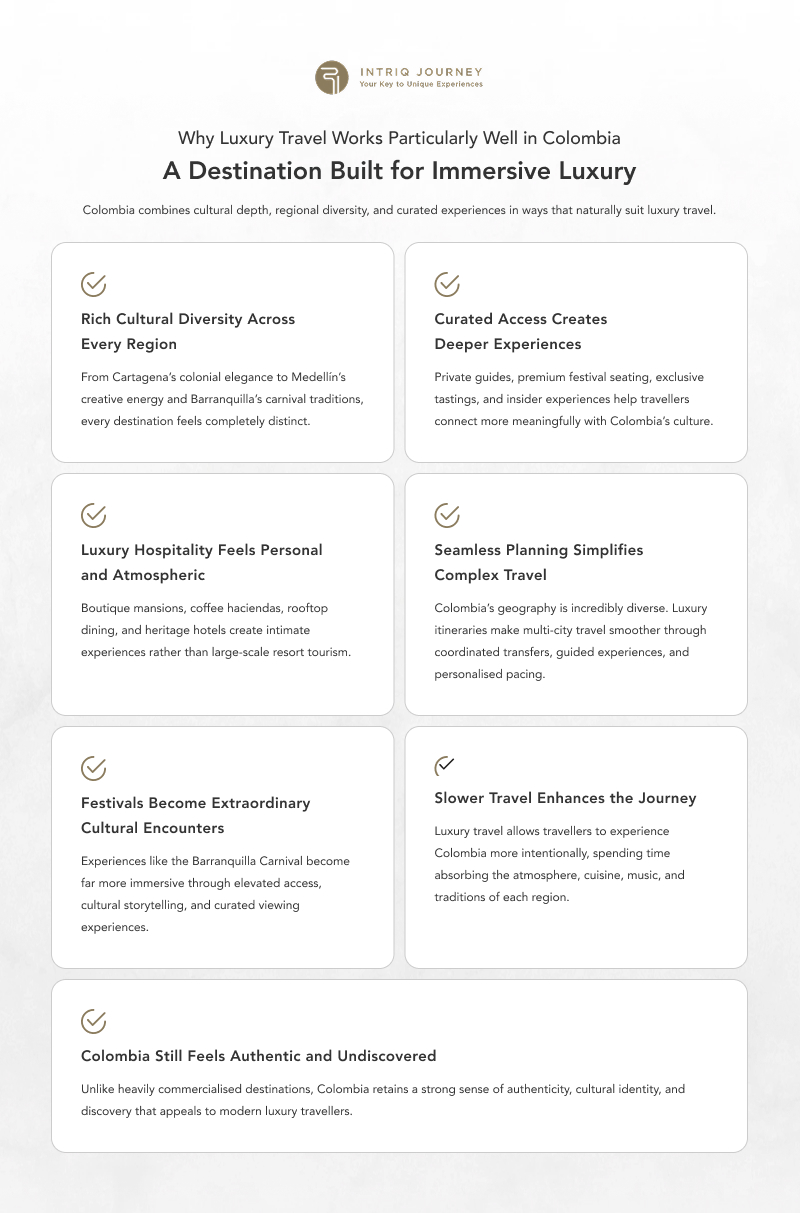
The most rewarding journeys through Colombia rarely involve rushing between attractions.
Instead, travellers benefit from intentional pacing.
Spend several evenings in Cartagena rather than treating it as a short stopover. Allow time for conversations during coffee estate visits. Experience Medellín beyond its surface-level attractions. Attend carnival events with local cultural guidance rather than navigating crowds independently.
Meaningful cultural tours in Colombia depend heavily on rhythm and atmosphere.
Travellers who slow down often discover far more than those attempting to maximise sightseeing volume.
For travellers planning more complex South American itineraries, working with an experienced tour agency in Singapore can also help create more cohesive regional journeys that balance comfort with cultural depth.
Part of Colombia’s appeal lies in the feeling that the country is still evolving culturally and globally.
Its luxury tourism scene feels refined yet not overexposed. Its festivals remain community-driven. Its creative cities continue redefining themselves. Its culinary identity is still expanding internationally.
This sense of momentum gives cultural tours in Colombia unusual energy.
Travellers are not simply observing preserved history. They are witnessing a destination actively shaping its modern cultural identity in real time.
That dynamic quality makes Colombia feel exciting in ways more established luxury destinations sometimes no longer do.
As interest in South America continues to grow, many travellers now look to a trusted tour company in Singapore that can design more immersive journeys beyond traditional tourist routes.
Colombia rewards travellers who seek emotional richness rather than passive sightseeing.
From the atmosphere of Cartagena’s colonial streets to the movement of the Batalla de Flores parade, the intensity of the Gran Parada Carnival parade, and the slower rhythms of the Andes coffee region, the country offers cultural immersion that feels deeply human, layered, and unforgettable.
Through thoughtfully curated itineraries, personalised access, and carefully paced experiences, Intriq Journey designs immersive cultural tours in Colombia that allow travellers to experience the country with greater depth, comfort, and cultural connection.
As a luxury-focused travel agency, we create journeys that go beyond sightseeing to become something far more memorable.
Contact us to begin planning your personalised Colombian cultural escape today.
For decades, luxury travel was measured by access.
The most desirable experiences were often those that felt distant, exclusive, and difficult to replicate. Private islands, hidden retreats, first-class cabins, and invitation-only itineraries became symbols of privilege, where luxury was expressed through rarity and reach.
Yet the most sophisticated travellers today are beginning to seek something different.
Comfort remains important. Exceptional service still matters. Beautiful destinations continue to inspire. But increasingly, the question has shifted from “How extraordinary is this experience?” to “What kind of experience am I participating in?”
Travel is becoming less transactional and more intentional.
Modern travellers recognise that every destination exists within a living ecosystem. Communities are not attractions. Landscapes are not limitless. Cultural traditions are not performances created for visitors. Every place carries its own identity, history, and rhythm.
This changing mindset has created space for a new expression of luxury, one that values connection as much as comfort.
This is where ethical tourism enters the conversation.
Rather than reducing the richness of travel, it elevates it.
Imagine arriving at an intimate mountain retreat designed around local architectural traditions. The ingredients served at dinner come from surrounding farms. Your guide grew up in the region and shares stories that do not appear in guidebooks. Your itinerary leaves room for discovery instead of constant movement.
The experience feels luxurious not because it isolates you from the destination, but because it allows you to understand it more deeply.
This shift reflects a broader evolution across global travel.
Luxury and responsibility are no longer opposing ideas. Together, they represent a more refined standard of travel, one where extraordinary experiences leave lasting impressions without unnecessary pressure.
As expectations continue to evolve, ethical tourism is becoming less of a niche philosophy and more of a marker of modern luxury.
The conversation around responsible travel often begins with sustainability, but conscious luxury travel reaches further.
Sustainability typically focuses on environmental impact. Ethical travel broadens the lens to consider the full relationship between traveller and destination.
At its core, ethical tourism encourages people to travel with awareness, asking not only whether a destination can sustain visitors, but whether tourism contributes positively to the people and places involved.
That perspective influences every stage of the journey.
It affects where travellers stay, how they move between destinations, which businesses they support, and how they engage with local customs.
Questions become more intentional:
Unlike traditional tourism models that prioritise volume and convenience, ethical tourism reframes travel as participation.
Travellers are no longer observers passing through. They become temporary contributors to the places they visit.
This approach does not require sacrificing comfort or sophistication.
In many cases, it creates experiences that feel more personal, layered, and meaningful than highly commercialised alternatives.
The growing appeal of conscious tourism reflects broader changes in traveller expectations.
Access to information has made the impacts of tourism increasingly visible. Travellers can now see how overtourism affects local housing markets, how uncontrolled visitor volumes strain ecosystems, and how certain experiences commodify cultural identity.
At the same time, luxury itself has evolved.
True luxury increasingly centres on rarity of access, emotional value, and authenticity rather than visible excess.
Today’s high-end traveller often values:
This is also where conversations around travel styles and preferences become increasingly important.
Some travellers still prioritise fast-paced itineraries and landmark experiences. Others seek slower journeys centred around wellness, conservation, culinary discovery, or cultural immersion.
Neither approach is inherently better.
However, mindful travel encourages travellers to consider whether their choices align with the impact they want their journey to create.
Rather than restricting possibilities, it often opens the door to experiences that feel more distinctive and emotionally memorable.
The idea of socially responsible tourism can feel abstract until it becomes visible through practical decisions.
In reality, responsible luxury often reveals itself through small details.
One of the clearest examples involves choosing accommodation and operators that retain economic value within the destination.
This may mean staying in independently operated lodges, selecting properties that hire and train local teams, or dining in restaurants that focus on regional ingredients.
These choices create a multiplier effect that strengthens local industries and preserves local identity.
Travellers increasingly seek experiences that feel authentic rather than staged.
Ethical travel experiences often involve working alongside communities instead of observing them from a distance.
Private artisan workshops, guided storytelling sessions, heritage-led culinary experiences, and local-led excursions can create stronger emotional connections than conventional sightseeing.
Wildlife encounters remain among the most sought-after luxury experiences globally.
However, sustainable travel encourages travellers to distinguish between observation and exploitation.
Conservation-led safaris, marine protection initiatives, and regulated wildlife viewing experiences help preserve biodiversity while maintaining access for future generations.
For travellers exploring destinations such as luxury safari holidays in Africa, this often means choosing operators that prioritise conservation partnerships, visitor education, and responsible wildlife practices.
Responsible luxury increasingly focuses on thoughtful operational choices.
Many high-end properties now incorporate renewable energy systems, landscape integration, water stewardship practices, and responsible sourcing while maintaining premium standards.
This shift reflects an important reality.
Luxury is becoming less about excess and more about intentional design.
One common misconception is that travelling responsibly requires extensive compromise.
In reality, how to plan a meaningful trip often begins with refining priorities rather than reducing expectations.
Start by asking:
These questions naturally introduce travel comfort level considerations.
Some travellers prefer intimate boutique experiences with deeper local immersion.
Others prioritise private transfers, larger properties, or curated access while still seeking meaningful engagement.
Luxury becomes most powerful when it reflects personal values rather than generic ideas of indulgence.
This also helps travellers discover more unique travel experiences, where exclusivity comes not from access alone, but from perspective, context, and authenticity.
For those new to curated travel, a slower itinerary with fewer destinations is often the best travel style for beginners, allowing time to experience places more deeply rather than simply collecting them.
For travellers seeking support in designing more intentional journeys, working with a specialised tour agency in Singapore, such as Intriq Journey, can simplify the process of balancing comfort, exclusivity, and responsible decision-making.
At first glance, luxury travel and ethical tourism may appear to pull in opposite directions.
Luxury is often associated with abundance and convenience. Responsible travel can sometimes be perceived as limiting options or introducing compromise.
Yet the most exceptional journeys increasingly prove otherwise.
True luxury has always been defined by thoughtful details, exceptional execution, and experiences that feel impossible to replicate. Those same qualities happen to align remarkably well with responsible travel principles.
A resort that employs local craftsmen creates spaces with more character than standardised global design.
A private dining experience curated around regional ingredients often feels more memorable than an imported luxury experience.
A slower itinerary with intentional pacing frequently creates stronger emotional value than visiting five destinations in seven days.
This evolution has quietly changed what premium travel means.
Luxury no longer needs to announce itself through scale.
Instead, it appears through precision.
Travellers increasingly seek journeys that feel curated around identity rather than excess. They want experiences that feel impossible to mass-produce.
This is where ethical tourism becomes particularly powerful.
It removes unnecessary layers between traveller and destination and replaces them with experiences that feel more intimate, immersive, and refined.
The result is not less luxury.
It is luxury with greater depth.
Behind every effortless luxury experience is a network of decisions that travellers rarely see.
The most respected travel providers understand that meaningful travel experiences are built long before guests arrive.
Today, ethical tourism is often quietly embedded in the design of premium travel.
Luxury hospitality increasingly extends beyond aesthetics.
Many properties are becoming more intentional about construction materials, local craftsmanship, culinary sourcing, and operational partnerships.
When local knowledge shapes architecture, menus, interiors, and experiences, destinations feel more authentic rather than interchangeable.
This creates a stronger sense of place while supporting local economies.
Interestingly, one of the strongest overlaps between luxury and responsibility is scale.
Boutique lodges, private villas, expedition-style journeys, and low-density experiences often naturally reduce environmental pressure while increasing guest quality.
Travellers gain quieter environments, more personalised service, and deeper engagement.
Destinations gain better protection from overcrowding.
Some of the world’s most remarkable travel experiences are now deeply connected to conservation.
Private reserves, marine restoration initiatives, regenerative hospitality models, and guided ecological programmes increasingly define premium travel.
Travellers may participate in wildlife monitoring, conservation education, local reforestation initiatives, or cultural preservation efforts.
Rather than detracting from luxury, these experiences often become the moments guests remember most.
Modern luxury travellers increasingly value credibility.
Beautiful branding alone is no longer enough.
Travellers now ask questions about sourcing, environmental commitments, partnerships, and community outcomes.
The strongest luxury providers understand that trust has become part of the premium experience.
This movement continues to reinforce ethical tourism as a long-term evolution rather than a passing trend.
Luxury travel may feel highly curated, but travellers remain one of the most influential forces shaping the future of tourism.
Every booking becomes a signal.
Every itinerary supports certain practices.
Every travel decision reinforces which destinations to continue prioritising.
Choosing journeys that align with ethical tourism does not mean becoming an expert in sustainability frameworks.
Instead, it begins with developing better questions.
Travellers often discover that the most memorable moments are rarely the most extravagant.
It may be an early morning walk with a local conservation guide.
A meal prepared around family traditions.
A conversation that reveals how a destination sees itself.
Locally rooted experiences tend to create stronger memories because they cannot be replicated elsewhere.
Responsible travel has become increasingly visible, but visibility alone does not guarantee impact.
Ask providers:
Luxury should feel effortless, but thoughtful travellers increasingly appreciate understanding the intention behind that effort.
One of the simplest ways to support responsible luxury travel is often to travel more slowly.
Staying longer in fewer destinations allows travellers to build stronger connections and reduce the constant movement that can place additional pressure on destinations.
This slower rhythm often creates more rewarding journeys.
Instead of returning home with a checklist completed, travellers return with stories.
Planning these experiences independently can become overwhelming.
Balancing exclusivity, comfort, logistics, and responsibility requires significant research and destination knowledge.
This is where curated luxury tours increasingly stand apart.
Rather than presenting travel as a collection of premium upgrades, carefully designed itineraries align the quality of the experience with long-term destination value.
Travellers considering destination-led experiences such as luxury holidays in Italy may find that slower regional journeys, private local access, and intentionally curated stays often reveal a more meaningful side of luxury than traditional checklist itineraries.
Not always.
Some responsible experiences may involve higher operational costs, but travellers often gain greater quality, exclusivity, authenticity, and personal connection in return. The value frequently comes from depth of experience rather than quantity.
No. Modern luxury increasingly integrates responsible practices into the experience itself. Guests often experience improved service, stronger connection to the destination, more personalised experiences, and higher overall quality.
Look for transparency.
Strong indicators include clear sourcing practices, local partnerships, conservation efforts, measurable commitments, and openness about how experiences are designed and delivered.
Absolutely.
In fact, milestone journeys often become more memorable when designed around personal meaning, cultural immersion, and a deeper connection to the destination rather than speed and volume.
Yes.
Travellers who are new to curated experiences often find that slower, more intentional itineraries offer a more enjoyable introduction than tightly packed schedules.
Luxury travel and sustainable tourism are no longer travelling on separate paths.
They are becoming part of the same conversation.
The future of extraordinary travel will not be defined by how much access we have, but by how intentionally we choose to engage with the places that welcome us.
The most memorable journeys rarely stay with us because of the thread count, the private transfer, or the view from the suite.
They stay because of what they made us feel.
A destination that changed perspective.
A conversation that created a connection.
A moment that felt impossible to recreate anywhere else.
At Intriq Journey, we believe meaningful travel should never require compromise. Every itinerary is thoughtfully curated to balance comfort, cultural depth, exclusivity, and a genuine respect for the places you visit.
Whether you are seeking secluded retreats, immersive cultural discovery, or journeys designed around conscious luxury, our approach focuses on creating experiences that feel deeply personal and intentionally crafted.
As you begin reimagining what luxury can look like, we invite you to explore journeys that reflect not only where you wish to go, but how you wish to experience the world.
Reach out to us to begin creating a journey that is refined, memorable, and thoughtfully designed from beginning to end.