
For decades, luxury travel was measured by access.
The most desirable experiences were often those that felt distant, exclusive, and difficult to replicate. Private islands, hidden retreats, first-class cabins, and invitation-only itineraries became symbols of privilege, where luxury was expressed through rarity and reach.
Yet the most sophisticated travellers today are beginning to seek something different.
Comfort remains important. Exceptional service still matters. Beautiful destinations continue to inspire. But increasingly, the question has shifted from “How extraordinary is this experience?” to “What kind of experience am I participating in?”
Travel is becoming less transactional and more intentional.
Modern travellers recognise that every destination exists within a living ecosystem. Communities are not attractions. Landscapes are not limitless. Cultural traditions are not performances created for visitors. Every place carries its own identity, history, and rhythm.
This changing mindset has created space for a new expression of luxury, one that values connection as much as comfort.
This is where ethical tourism enters the conversation.
Rather than reducing the richness of travel, it elevates it.
Imagine arriving at an intimate mountain retreat designed around local architectural traditions. The ingredients served at dinner come from surrounding farms. Your guide grew up in the region and shares stories that do not appear in guidebooks. Your itinerary leaves room for discovery instead of constant movement.
The experience feels luxurious not because it isolates you from the destination, but because it allows you to understand it more deeply.
This shift reflects a broader evolution across global travel.
Luxury and responsibility are no longer opposing ideas. Together, they represent a more refined standard of travel, one where extraordinary experiences leave lasting impressions without unnecessary pressure.
As expectations continue to evolve, ethical tourism is becoming less of a niche philosophy and more of a marker of modern luxury.
The conversation around responsible travel often begins with sustainability, but conscious luxury travel reaches further.
Sustainability typically focuses on environmental impact. Ethical travel broadens the lens to consider the full relationship between traveller and destination.
At its core, ethical tourism encourages people to travel with awareness, asking not only whether a destination can sustain visitors, but whether tourism contributes positively to the people and places involved.
That perspective influences every stage of the journey.
It affects where travellers stay, how they move between destinations, which businesses they support, and how they engage with local customs.
Questions become more intentional:
Unlike traditional tourism models that prioritise volume and convenience, ethical tourism reframes travel as participation.
Travellers are no longer observers passing through. They become temporary contributors to the places they visit.
This approach does not require sacrificing comfort or sophistication.
In many cases, it creates experiences that feel more personal, layered, and meaningful than highly commercialised alternatives.
The growing appeal of conscious tourism reflects broader changes in traveller expectations.
Access to information has made the impacts of tourism increasingly visible. Travellers can now see how overtourism affects local housing markets, how uncontrolled visitor volumes strain ecosystems, and how certain experiences commodify cultural identity.
At the same time, luxury itself has evolved.
True luxury increasingly centres on rarity of access, emotional value, and authenticity rather than visible excess.
Today’s high-end traveller often values:
This is also where conversations around travel styles and preferences become increasingly important.
Some travellers still prioritise fast-paced itineraries and landmark experiences. Others seek slower journeys centred around wellness, conservation, culinary discovery, or cultural immersion.
Neither approach is inherently better.
However, mindful travel encourages travellers to consider whether their choices align with the impact they want their journey to create.
Rather than restricting possibilities, it often opens the door to experiences that feel more distinctive and emotionally memorable.
The idea of socially responsible tourism can feel abstract until it becomes visible through practical decisions.
In reality, responsible luxury often reveals itself through small details.
One of the clearest examples involves choosing accommodation and operators that retain economic value within the destination.
This may mean staying in independently operated lodges, selecting properties that hire and train local teams, or dining in restaurants that focus on regional ingredients.
These choices create a multiplier effect that strengthens local industries and preserves local identity.
Travellers increasingly seek experiences that feel authentic rather than staged.
Ethical travel experiences often involve working alongside communities instead of observing them from a distance.
Private artisan workshops, guided storytelling sessions, heritage-led culinary experiences, and local-led excursions can create stronger emotional connections than conventional sightseeing.
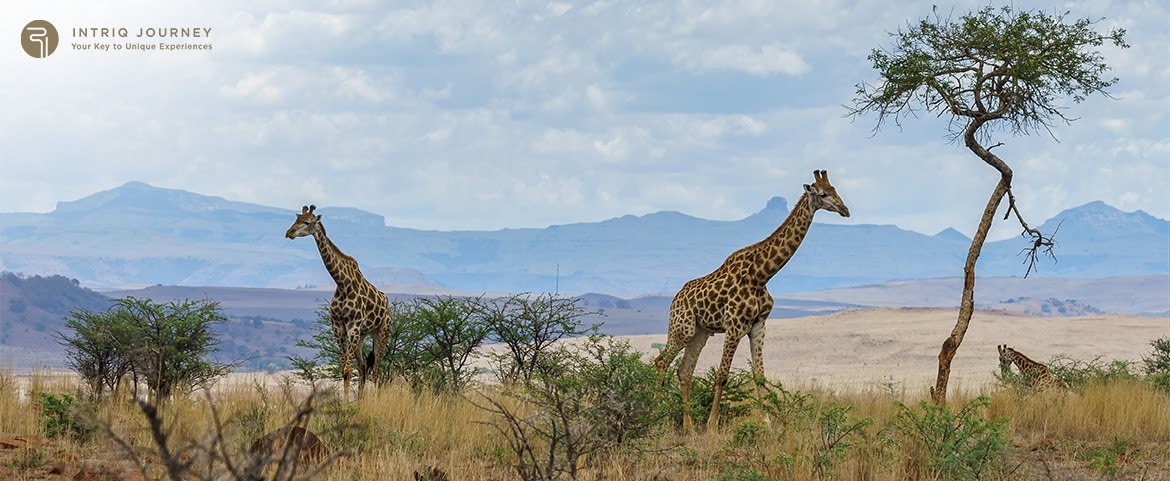
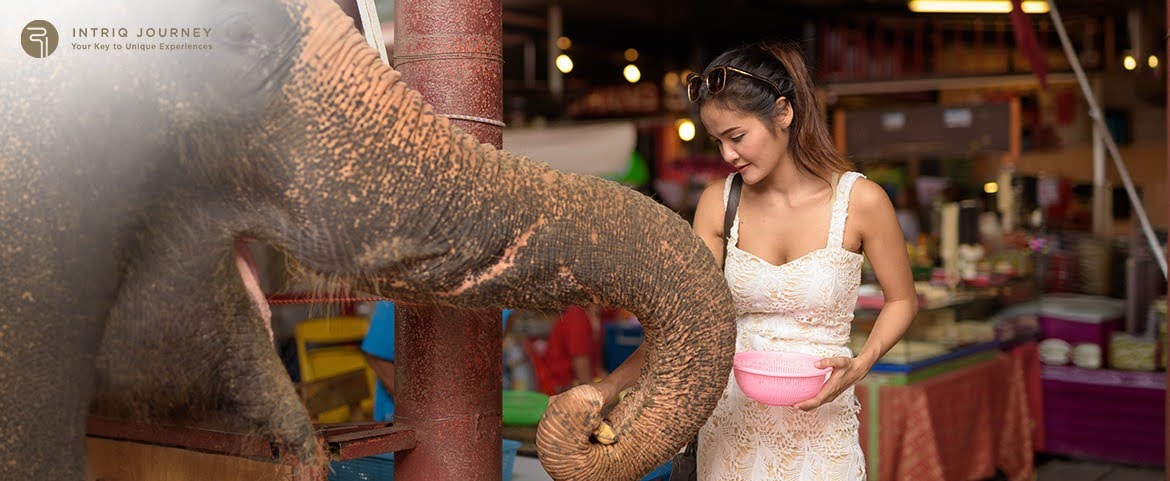
Wildlife encounters remain among the most sought-after luxury experiences globally.
However, sustainable travel encourages travellers to distinguish between observation and exploitation.
Conservation-led safaris, marine protection initiatives, and regulated wildlife viewing experiences help preserve biodiversity while maintaining access for future generations.
For travellers exploring destinations such as luxury safari holidays in Africa, this often means choosing operators that prioritise conservation partnerships, visitor education, and responsible wildlife practices.
Responsible luxury increasingly focuses on thoughtful operational choices.
Many high-end properties now incorporate renewable energy systems, landscape integration, water stewardship practices, and responsible sourcing while maintaining premium standards.
This shift reflects an important reality.
Luxury is becoming less about excess and more about intentional design.
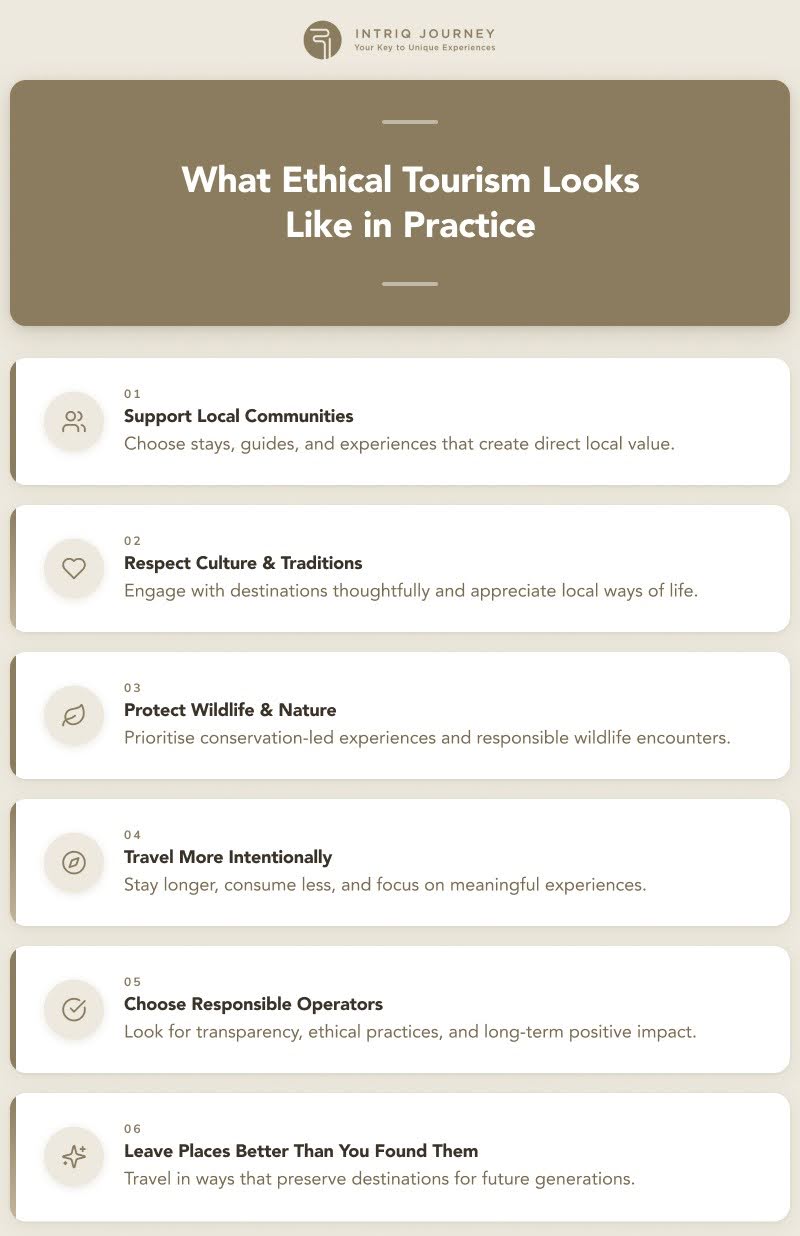
One common misconception is that travelling responsibly requires extensive compromise.
In reality, how to plan a meaningful trip often begins with refining priorities rather than reducing expectations.
Start by asking:
These questions naturally introduce travel comfort level considerations.
Some travellers prefer intimate boutique experiences with deeper local immersion.
Others prioritise private transfers, larger properties, or curated access while still seeking meaningful engagement.
Luxury becomes most powerful when it reflects personal values rather than generic ideas of indulgence.
This also helps travellers discover more unique travel experiences, where exclusivity comes not from access alone, but from perspective, context, and authenticity.
For those new to curated travel, a slower itinerary with fewer destinations is often the best travel style for beginners, allowing time to experience places more deeply rather than simply collecting them.
For travellers seeking support in designing more intentional journeys, working with a specialised tour agency in Singapore, such as Intriq Journey, can simplify the process of balancing comfort, exclusivity, and responsible decision-making.
At first glance, luxury travel and ethical tourism may appear to pull in opposite directions.
Luxury is often associated with abundance and convenience. Responsible travel can sometimes be perceived as limiting options or introducing compromise.
Yet the most exceptional journeys increasingly prove otherwise.
True luxury has always been defined by thoughtful details, exceptional execution, and experiences that feel impossible to replicate. Those same qualities happen to align remarkably well with responsible travel principles.
A resort that employs local craftsmen creates spaces with more character than standardised global design.
A private dining experience curated around regional ingredients often feels more memorable than an imported luxury experience.
A slower itinerary with intentional pacing frequently creates stronger emotional value than visiting five destinations in seven days.
This evolution has quietly changed what premium travel means.
Luxury no longer needs to announce itself through scale.
Instead, it appears through precision.
Travellers increasingly seek journeys that feel curated around identity rather than excess. They want experiences that feel impossible to mass-produce.
This is where ethical tourism becomes particularly powerful.
It removes unnecessary layers between traveller and destination and replaces them with experiences that feel more intimate, immersive, and refined.
The result is not less luxury.
It is luxury with greater depth.
Behind every effortless luxury experience is a network of decisions that travellers rarely see.
The most respected travel providers understand that meaningful travel experiences are built long before guests arrive.
Today, ethical tourism is often quietly embedded in the design of premium travel.
Luxury hospitality increasingly extends beyond aesthetics.
Many properties are becoming more intentional about construction materials, local craftsmanship, culinary sourcing, and operational partnerships.
When local knowledge shapes architecture, menus, interiors, and experiences, destinations feel more authentic rather than interchangeable.
This creates a stronger sense of place while supporting local economies.
Interestingly, one of the strongest overlaps between luxury and responsibility is scale.
Boutique lodges, private villas, expedition-style journeys, and low-density experiences often naturally reduce environmental pressure while increasing guest quality.
Travellers gain quieter environments, more personalised service, and deeper engagement.
Destinations gain better protection from overcrowding.
Some of the world’s most remarkable travel experiences are now deeply connected to conservation.
Private reserves, marine restoration initiatives, regenerative hospitality models, and guided ecological programmes increasingly define premium travel.
Travellers may participate in wildlife monitoring, conservation education, local reforestation initiatives, or cultural preservation efforts.
Rather than detracting from luxury, these experiences often become the moments guests remember most.
Modern luxury travellers increasingly value credibility.
Beautiful branding alone is no longer enough.
Travellers now ask questions about sourcing, environmental commitments, partnerships, and community outcomes.
The strongest luxury providers understand that trust has become part of the premium experience.
This movement continues to reinforce ethical tourism as a long-term evolution rather than a passing trend.
Luxury travel may feel highly curated, but travellers remain one of the most influential forces shaping the future of tourism.
Every booking becomes a signal.
Every itinerary supports certain practices.
Every travel decision reinforces which destinations to continue prioritising.
Choosing journeys that align with ethical tourism does not mean becoming an expert in sustainability frameworks.
Instead, it begins with developing better questions.
Travellers often discover that the most memorable moments are rarely the most extravagant.
It may be an early morning walk with a local conservation guide.
A meal prepared around family traditions.
A conversation that reveals how a destination sees itself.
Locally rooted experiences tend to create stronger memories because they cannot be replicated elsewhere.
Responsible travel has become increasingly visible, but visibility alone does not guarantee impact.
Ask providers:
Luxury should feel effortless, but thoughtful travellers increasingly appreciate understanding the intention behind that effort.
One of the simplest ways to support responsible luxury travel is often to travel more slowly.
Staying longer in fewer destinations allows travellers to build stronger connections and reduce the constant movement that can place additional pressure on destinations.
This slower rhythm often creates more rewarding journeys.
Instead of returning home with a checklist completed, travellers return with stories.
Planning these experiences independently can become overwhelming.
Balancing exclusivity, comfort, logistics, and responsibility requires significant research and destination knowledge.
This is where curated luxury tours increasingly stand apart.
Rather than presenting travel as a collection of premium upgrades, carefully designed itineraries align the quality of the experience with long-term destination value.
Travellers considering destination-led experiences such as luxury holidays in Italy may find that slower regional journeys, private local access, and intentionally curated stays often reveal a more meaningful side of luxury than traditional checklist itineraries.
Not always.
Some responsible experiences may involve higher operational costs, but travellers often gain greater quality, exclusivity, authenticity, and personal connection in return. The value frequently comes from depth of experience rather than quantity.
No. Modern luxury increasingly integrates responsible practices into the experience itself. Guests often experience improved service, stronger connection to the destination, more personalised experiences, and higher overall quality.
Look for transparency.
Strong indicators include clear sourcing practices, local partnerships, conservation efforts, measurable commitments, and openness about how experiences are designed and delivered.
Absolutely.
In fact, milestone journeys often become more memorable when designed around personal meaning, cultural immersion, and a deeper connection to the destination rather than speed and volume.
Yes.
Travellers who are new to curated experiences often find that slower, more intentional itineraries offer a more enjoyable introduction than tightly packed schedules.
Luxury travel and sustainable tourism are no longer travelling on separate paths.
They are becoming part of the same conversation.
The future of extraordinary travel will not be defined by how much access we have, but by how intentionally we choose to engage with the places that welcome us.
The most memorable journeys rarely stay with us because of the thread count, the private transfer, or the view from the suite.
They stay because of what they made us feel.
A destination that changed perspective.
A conversation that created a connection.
A moment that felt impossible to recreate anywhere else.
At Intriq Journey, we believe meaningful travel should never require compromise. Every itinerary is thoughtfully curated to balance comfort, cultural depth, exclusivity, and a genuine respect for the places you visit.
Whether you are seeking secluded retreats, immersive cultural discovery, or journeys designed around conscious luxury, our approach focuses on creating experiences that feel deeply personal and intentionally crafted.
As you begin reimagining what luxury can look like, we invite you to explore journeys that reflect not only where you wish to go, but how you wish to experience the world.
Reach out to us to begin creating a journey that is refined, memorable, and thoughtfully designed from beginning to end.