For travellers arriving from Singapore, few destinations feel as profoundly different as Tibet.
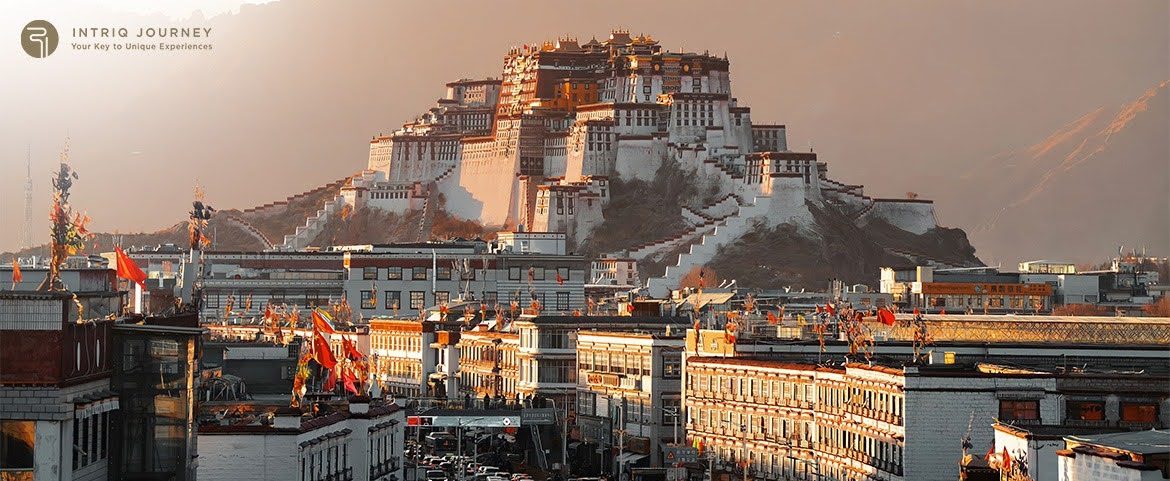
Singapore’s skyline rises through glass, steel, and commerce. Lhasa’s skyline, by contrast, is shaped by golden rooftops, monastery walls, and prayer flags fluttering against an immense mountain sky. Here, spirituality is not confined to sacred buildings or special occasions. It is woven into everyday life.
For centuries, travellers approaching Lhasa described the city not simply as a political capital, but as a destination of pilgrimage. Monks, traders, nomads, and devotees crossed some of the world’s most challenging terrain to reach this high-altitude sanctuary, where faith shaped the rhythm of society.
Today, exploring the city through a guide to Lhasa monasteries reveals why it remains the spiritual heart of Tibet. Ancient institutions continue to influence daily life, while rituals practised for centuries remain deeply embedded within the city’s identity.
Prayer wheels turn steadily in temple corridors. Butter lamps flicker before sacred statues. Pilgrims move through ancient courtyards with quiet determination, reciting mantras passed down through generations.
Lhasa is not merely a place to learn about Tibetan Buddhism.
It is where the tradition continues to live.
Lhasa’s significance extends far beyond its role as a capital city.
For centuries, it served as the centre of religious authority throughout Tibet, home to influential monasteries, revered temples, and some of the most important figures in Tibetan Buddhism. Pilgrims travelled vast distances to seek blessings, study sacred teachings, and participate in important religious festivals.
The city’s monasteries became more than places of worship. They evolved into centres of philosophy, education, medicine, art, literature, and governance. Many of Tibet’s greatest scholars and spiritual leaders emerged from these institutions, shaping the development of Tibetan Buddhism across the region.
Understanding Lhasa monasteries, therefore, provides a deeper understanding of Tibet itself. Their influence can still be felt throughout the city, from the daily routines of local residents to the sacred traditions that continue to draw pilgrims from across the plateau.
Among all the sacred sites in Tibet, none commands greater reverence than the Jokhang Temple in Lhasa.
Founded in the 7th century during the reign of King Songtsen Gampo, the temple occupies both the physical and spiritual centre of the city. For more than a millennium, it has remained the most important pilgrimage destination in Tibetan Buddhism.
Many visitors first notice the extraordinary devotion surrounding the temple before they even enter. Pilgrims arrive from every corner of Tibet. Some have travelled for months. Others perform full-body prostrations as part of their spiritual journey before finally reaching the temple gates.
Inside, the atmosphere changes immediately.
Ancient corridors glow with the light of countless butter lamps. The scent of incense fills the air. Darkened walls bear the marks of centuries of prayer, while worshippers move quietly between sacred shrines.
At the heart of the temple stands the revered Jowo Shakyamuni statue, believed by many Tibetans to be the most sacred image of the Buddha in existence.
For pilgrims, a visit to Jokhang represents a profound spiritual milestone. For travellers, it offers an intimate glimpse into a living tradition of devotion that continues to define Tibetan culture today.
Within any guide to Lhasa monasteries, Jokhang Temple remains the spiritual centre from which the city’s religious life radiates.
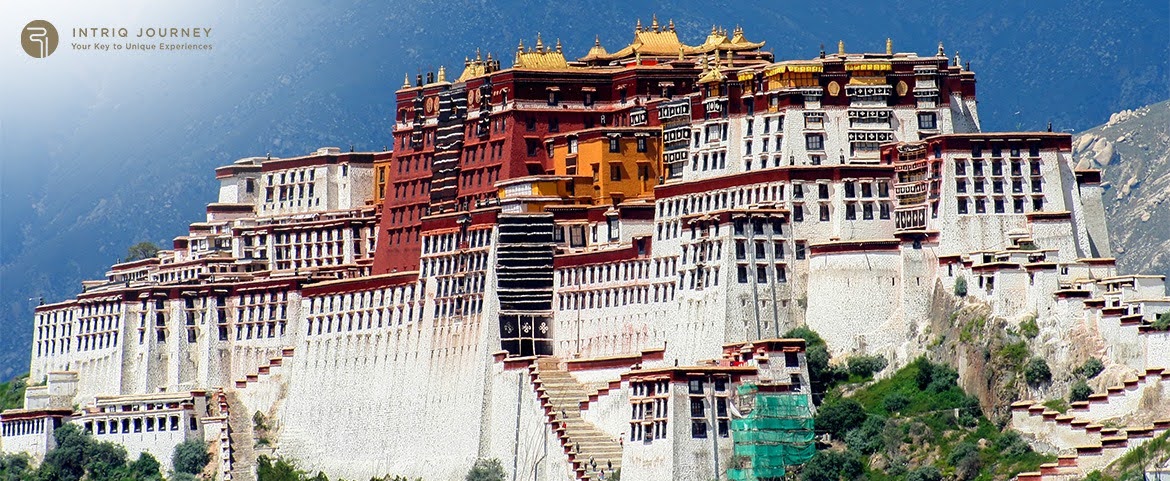
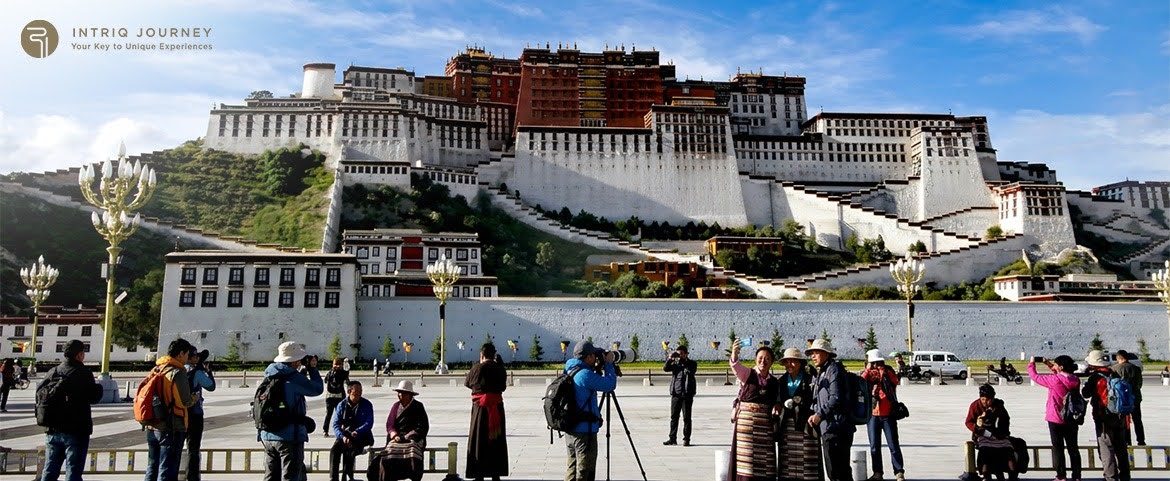
Few landmarks are as instantly recognisable as Potala Palace.
Rising dramatically above Lhasa from Red Hill, the palace appears almost suspended between earth and sky. Its immense white walls and crimson towers dominate the landscape, creating one of the most iconic images in Asia.
For centuries, Potala Palace served as the winter residence of successive Dalai Lamas. It functioned as both a spiritual centre and the administrative heart of Tibet, bringing together religious authority and political leadership under one roof.
The scale of the complex is remarkable.
Visitors ascend steep staircases into a labyrinth of chapels, meditation halls, ceremonial chambers, sacred stupas, and repositories of religious art. Priceless manuscripts, elaborate thangkas, and gilded statues provide insight into centuries of Tibetan history and spiritual practice.
Yet despite its grandeur, Potala Palace retains a deeply contemplative atmosphere.
As visitors move through its sacred spaces, the palace reveals itself not merely as a historical monument, but as a powerful symbol of Tibet’s spiritual legacy and cultural identity.
No exploration of Lhasa monasteries would be complete without understanding the central role Potala Palace played in shaping Tibetan civilisation.
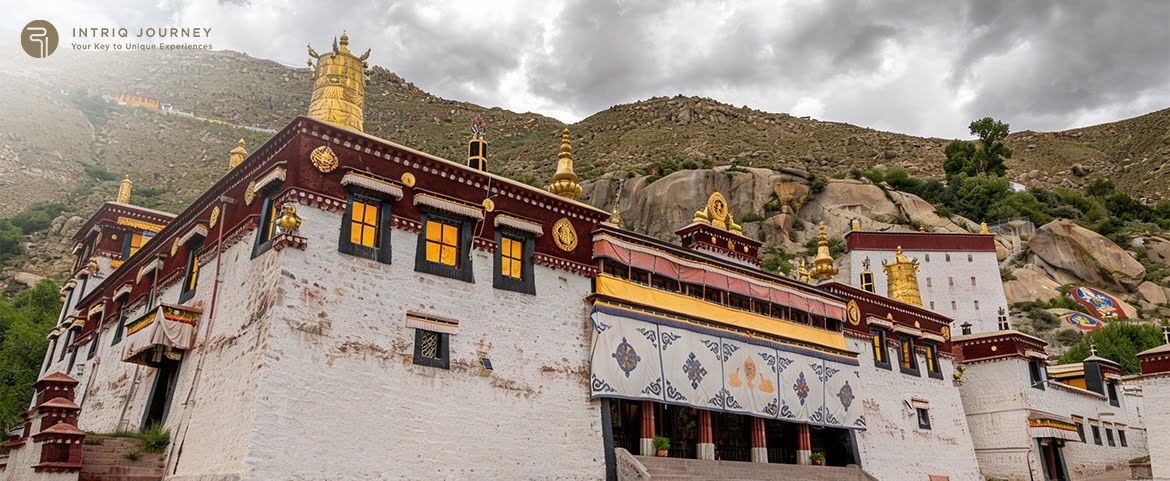
While Jokhang Temple embodies devotion and Potala Palace symbolises leadership, Sera Monastery reveals another important dimension of Tibetan Buddhism: intellectual inquiry.
Founded in the 15th century, Sera became one of Tibet’s foremost monastic universities. For generations, monks dedicated themselves to the study of Buddhist philosophy, ethics, logic, and scripture within its walls.
Today, visitors are often drawn by the famous Sera Monastery debate sessions held each afternoon.
Within a shaded courtyard, monks gather in pairs or groups to engage in vigorous philosophical discussions. Questions are delivered rapidly. Responses are challenged. Hands clap sharply to punctuate arguments and test reasoning.
To first-time observers, the debates can appear almost theatrical.
Yet every movement serves a purpose.
The debates form part of a centuries-old educational tradition designed to strengthen critical thinking and deepen understanding of complex philosophical concepts.
Witnessing a debate at Sera Monastery often challenges common perceptions of monastic life. Rather than passive contemplation alone, visitors encounter a vibrant intellectual culture that values rigorous analysis alongside spiritual practice.
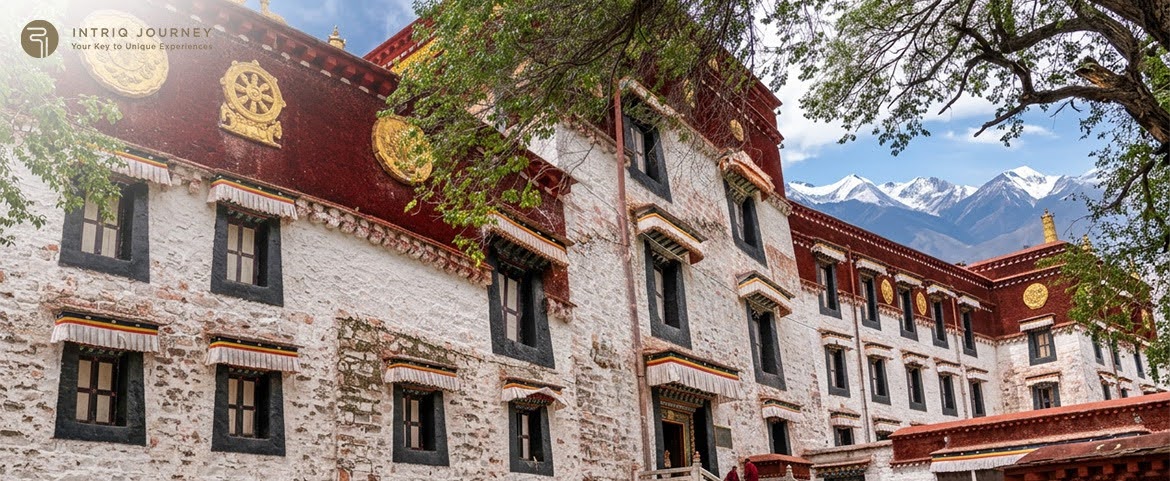
Situated on the mountainside west of Lhasa, Drepung Monastery was once considered the largest monastery in the world.
At its height, thousands of monks lived, studied, and practised within its vast complex. The monastery became one of the most influential centres of Buddhist learning in Tibet and played a major role in shaping religious scholarship throughout the region.
From afar, its whitewashed buildings appear to cascade down the hillside like a frozen river of stone.
Walking through its courtyards today offers insight into the immense scale of monastic life that once flourished here. Assembly halls, chapels, libraries, and residential quarters reveal the complexity of an institution that functioned as both a spiritual community and an academic centre.
Together with Jokhang Temple, Potala Palace, and Sera Monastery, Drepung forms an essential part of understanding Lhasa’s spiritual landscape.
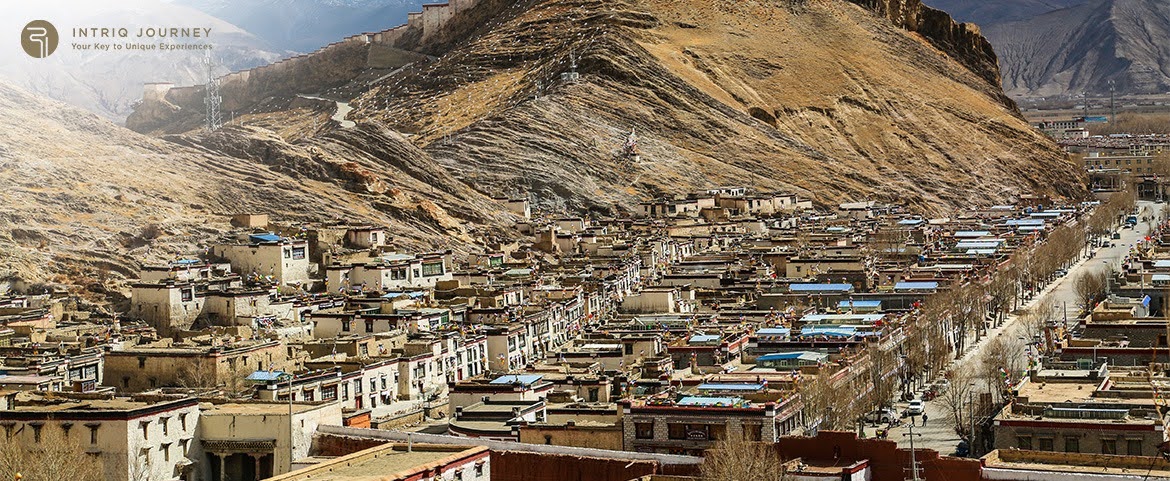
Although often viewed primarily through the lens of Tibetan Buddhism, Lhasa has long occupied an important position within wider networks of cultural exchange across Asia.
For centuries, merchants, pilgrims, scholars, and spiritual teachers travelled between Tibet, Central Asia, India, Nepal, and China, carrying ideas, artistic influences, and religious teachings across immense distances. These exchanges helped shape many of the monasteries that visitors encounter today.
The architecture, artworks, sacred texts, and philosophical traditions preserved within Lhasa’s monasteries reflect centuries of interaction with neighbouring cultures.
For travellers fascinated by the cultural forces that shaped Tibet, the story does not end at the plateau’s borders. Across Asia, ancient trade routes carried not only goods but also religious teachings, artistic influences, and philosophical ideas between distant civilisations.
This broader narrative can be explored through luxury Silk Road tours, where travellers encounter many of the same themes of cultural exchange, spiritual discovery, and historical connection that helped shape the monasteries and sacred traditions of Lhasa.
Not all sacred experiences in Lhasa take place within monastery walls.
One of the most moving expressions of Tibetan spirituality can be found along the famous Barkhor Street pilgrimage route that encircles Jokhang Temple.
From dawn until late evening, a continuous stream of pilgrims moves clockwise around the sacred circuit. Prayer wheels spin gently in their hands. Prayer beads pass rhythmically through their fingers. Softly spoken mantras blend with the sounds of daily life.
For many Tibetans, completing this pilgrimage is an act of devotion, merit-making, and spiritual reflection.
For visitors, it provides a rare opportunity to witness faith expressed not through formal ceremony but through everyday movement.
The route itself is lined with traditional shops selling prayer flags, incense, religious artefacts, and handcrafted goods. Yet despite its commercial activity, the atmosphere remains unmistakably sacred.
The Barkhor is more than a street.
It is a living ritual that has connected generations of pilgrims to the spiritual heart of Lhasa.
Many visitors arrive expecting to see historic buildings.
They leave with something far more profound.
The monasteries of Lhasa reveal how spirituality can shape an entire civilisation. Within these sacred spaces, religion intersects with philosophy, art, architecture, education, and community life.
Travellers gain insight into a worldview that values compassion, mindfulness, wisdom, and interdependence. They encounter traditions that have endured through centuries of change while remaining deeply relevant to contemporary Tibetan culture.
More importantly, they witness Tibetan Buddhism not as a relic of history, but as a living practice woven into everyday life.
For many travellers, these experiences become the defining moments of thoughtfully designed luxury Tibet tours, where meaningful cultural encounters are balanced with the practical considerations of travelling on the Tibetan Plateau.
Time is intentionally built into the journey for gradual acclimatisation, while carefully paced days allow travellers to move between monasteries without feeling hurried.
The result is a more immersive experience, creating space to absorb the atmosphere of sacred sites, witness daily devotional practices, and engage more deeply with Tibet’s living spiritual traditions.
This is what makes exploring the monasteries of Lhasa such a rewarding experience.
The journey extends beyond sightseeing into a deeper understanding of one of the world’s most distinctive spiritual traditions.
Exploring Lhasa’s monasteries requires more than visiting historic landmarks. These sacred institutions preserve centuries of philosophy, devotion, scholarship, and cultural tradition, offering rare insight into one of the world’s most enduring spiritual civilisations.
At Intriq Journey, we believe meaningful travel begins with understanding. Our carefully curated Tibet journeys are designed to reveal the stories behind each monastery, temple, and pilgrimage route through expert guidance, thoughtful pacing, and immersive cultural experiences.
Whether witnessing monks engaged in philosophical debate, joining pilgrims along the Barkhor circuit, or standing before the sacred halls of Jokhang Temple, travellers gain a deeper appreciation of the traditions that continue to shape Tibetan life today.
If you are considering a journey to Tibet, contact us to begin planning a bespoke itinerary tailored to your interests, travel style, and aspirations. Through thoughtful exploration and expert insight, the spiritual heart of Tibet reveals itself in ways that remain long after the journey ends.