
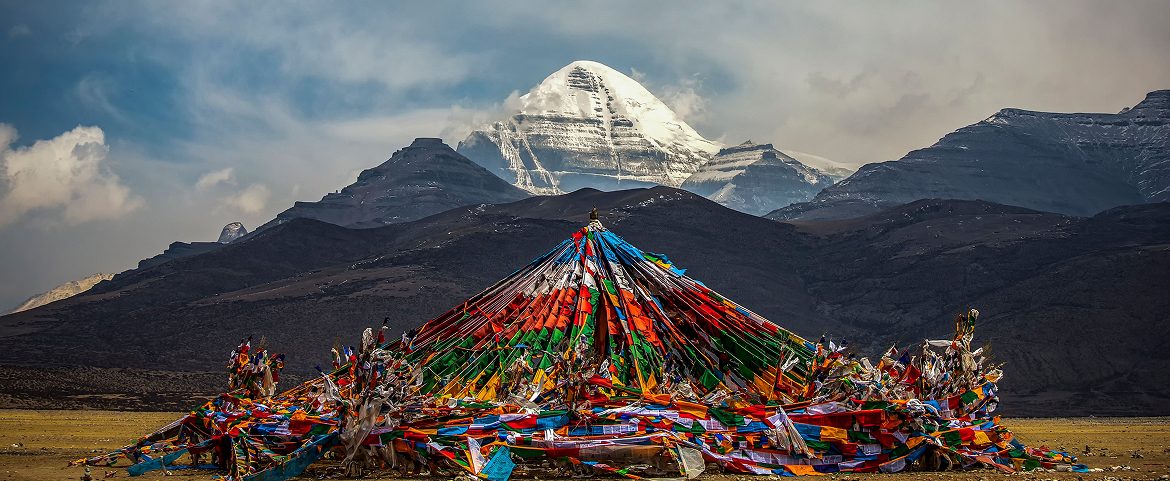
Across the remote western reaches of Tibet stands a mountain that has shaped spiritual imagination for centuries. Rising to approximately 6,675 metres above sea level, Mount Kailash appears almost impossibly composed, its snow-lined ridges forming a striking pyramid against the wide, wind-brushed sky.
For travellers researching famous mountains in Tibet, Mount Kailash often emerges as the most remarkable. Yet its power does not come from height alone. It is not the tallest mountain in Tibet, nor is it celebrated in the same way as Everest, where climbers measure achievement by reaching the summit.
Mount Kailash belongs to a different order of meaning.
It is a mountain approached through devotion rather than conquest. For centuries, pilgrims have crossed vast distances to stand before it, circle it, pray before it, and absorb the quiet gravity of its presence. Its slopes remain unclimbed not because they are unseen, but because they are revered.
In a world where mountains are often treated as challenges to overcome, Mount Kailash is a reminder that some places are powerful precisely because they ask us to pause, lower our voice, and look with humility.
Mount Kailash is widely considered one of the sacred mountains that Tibet is most known for, yet its significance extends far beyond Tibetan culture alone. It occupies a rare spiritual position across several major religious traditions, each of which sees the mountain as a place of cosmic importance.
In Tibetan Buddhism, Mount Kailash is associated with Demchok, also known as Chakrasamvara, a deity linked with supreme bliss and enlightenment. The surrounding landscape is often understood through sacred mandala symbolism, where the mountain and its valleys form part of a larger spiritual geography.
In Hinduism, Mount Kailash is revered as the home of Lord Shiva and his consort Parvati. Devotees often view it as the earthly manifestation of Mount Meru, the mythic centre of the universe. To stand before Kailash is, for many, to come close to a divine axis that connects heaven and earth.
For followers of Jainism, the mountain is associated with Rishabhadeva, the first Jain Tirthankara, who is believed to have attained spiritual liberation there. Meanwhile, practitioners of Bon, Tibet’s ancient pre-Buddhist spiritual tradition, regard the mountain as a seat of immense spiritual power and mystical energy.
These overlapping beliefs explain why Mount Kailash has long drawn pilgrims from across Asia. A traveller may first encounter it as a famous mountain in Tibet, but the closer one looks, the more it reveals itself as a universal sacred symbol.
One of the most extraordinary things about Mount Kailash is that it remains unclimbed. There is no confirmed summit ascent, and this absence has become part of the mountain’s identity.
For many of the world’s great peaks, fame is tied to mountaineering history. Records are set. Routes are named. Climbers test themselves against altitude, weather, and danger.
Mount Kailash resists that language entirely.
Its sacred status has led religious communities and authorities to discourage climbing to respect its spiritual significance. Over the years, mountaineers have occasionally expressed interest in attempting the summit, but such plans have been abandoned due to cultural and ethical considerations.
This restraint is central to understanding Mount Kailash. It is not treated as a challenge to conquer, but as a sacred presence to honour. In that sense, the mountain’s untouched summit may be one of its most powerful statements.
For travellers looking for famous mountains in Tibet, this can feel striking. Mount Kailash is not famous because humanity has stood atop it. It is famous because generations have chosen not to.
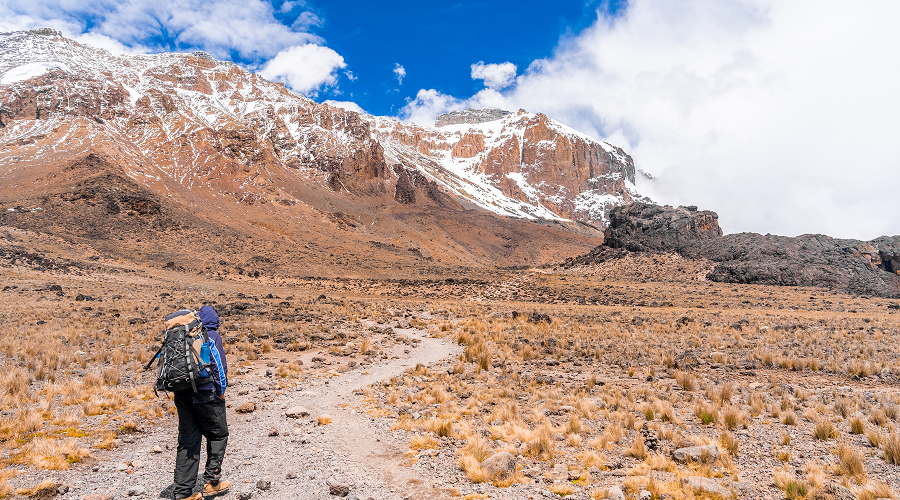
The heart of the Mount Kailash pilgrimage is the kora, a ritual circuit around the mountain. Instead of ascending its slopes, pilgrims walk around its base in a circular journey of devotion, purification, and reflection.
The route covers approximately 52 kilometres and is typically completed over three days by travellers and pilgrims. The path passes through remote valleys, open plains, river crossings, prayer-flag-covered sites, and high mountain terrain. Its most demanding point is Dolma La Pass, which rises to more than 5,600 metres above sea level.
For pilgrims, the kora is not merely a physical route. It is an act of spiritual intention.
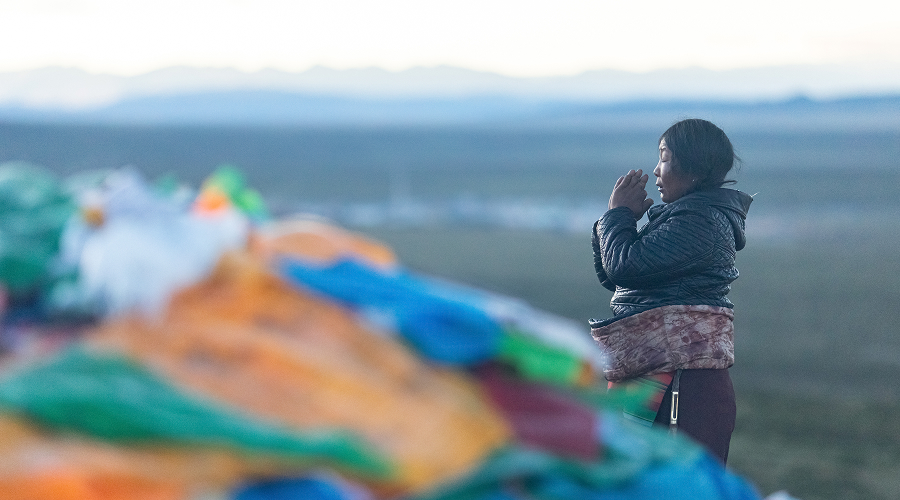
Some walk quietly while turning prayer beads and reciting mantras. Others perform full-body prostrations along the route, lowering themselves to the earth, rising again, then moving forward only a short distance before repeating the gesture. What might take one traveller three days can take a prostrating pilgrim far longer.
The rhythm of the pilgrimage is humbling. It turns the mountain into something slowly encountered rather than quickly consumed. Every step becomes part of an inward journey.
For those who come to Tibet through luxury Tibet tours, the experience need not diminish the mountain’s solemnity. At its best, a carefully curated journey allows travellers to approach Mount Kailash with the right preparation, cultural understanding, and respect for the spiritual atmosphere surrounding the pilgrimage.
The Kailash Kora trek is one of the most meaningful journeys in Tibet, but it also requires careful preparation. The route’s spiritual significance can sometimes overshadow its physical demands, especially for first-time travellers to the Tibetan Plateau.
The terrain is remote and exposed. Weather conditions can shift quickly. Altitude is a major consideration, particularly around Dolma La Pass, where the air becomes thin and every movement requires more effort. Even experienced travellers may find the route demanding if they are not properly acclimatised.
This is why pacing matters.
A well-planned journey to Mount Kailash should not rush towards the kora. Travellers benefit from gradual acclimatisation, time to adjust to the plateau, and a route that accounts for rest, hydration, and altitude awareness. The journey across western Tibet is long, and the region’s remoteness makes careful logistics essential.
Yet the difficulty is part of what gives the kora its emotional weight. The landscape does not offer easy drama. It reveals itself slowly through bare earth, distant ridgelines, stone shelters, wind-bent prayer flags, and moments of silence that feel almost ceremonial.
For travellers researching popular mountains in Tibet, the Kailash Kora offers far more than scenic trekking. It is a physical passage through a sacred landscape, where endurance and reverence meet.
Mount Kailash does not stand alone in spiritual imagination. The wider region around it forms an entire sacred geography, shaped by mountains, lakes, valleys, and pilgrimage routes.
Nearby lies Lake Manasarovar, one of the highest freshwater lakes in the world. Its waters are revered for their purity, and many pilgrims bathe or perform rituals along its shores as part of their spiritual journey. On clear days, the lake reflects the surrounding mountains with a stillness that feels almost unreal.
Beside it lies Lake Rakshastal, a darker and more austere body of water whose stark beauty contrasts with the serenity of Manasarovar. Together, the two lakes create a landscape of dualities: purity and mystery, softness and severity, reflection and shadow.
This broader setting helps explain why Mount Kailash is not simply seen as a single peak. It is part of a sacred world where geography and belief are inseparable.
Travellers who have experienced other cultural routes through Asia may find this especially compelling. The sense of layered history, spiritual exchange, and remote overland movement often resonates with those drawn to luxury Silk Road tours, where landscapes are understood not just as destinations, but as corridors of civilisation, faith, and memory.
In western Tibet, that feeling is intensified. The land seems stripped back to its most elemental form. The sky feels vast. Distances feel ancient. The mountain rises not as an isolated object, but as the centre of a living spiritual map.
There are many reasons travellers are drawn to Tibet: monasteries, plateau landscapes, ancient cities, high-altitude lakes, and the quiet intensity of Tibetan Buddhist culture. Yet Mount Kailash holds a distinctive place within this world.
It is remote enough to feel almost mythical, yet present enough to leave a lasting impression. It is visually arresting, yet its deepest meaning cannot be captured by appearance alone. It is a popular mountain in Tibet, but its fame is rooted in something far older than travel photography or modern adventure.
Part of its appeal lies in the contrast between simplicity and magnitude. From a distance, the mountain appears still and silent. Around it, however, centuries of prayer, pilgrimage, myth, and devotion continue to move. This combination gives Mount Kailash a rare emotional force.
For some travellers, the journey is religious. For others, it is cultural, philosophical, or deeply personal. Even those who do not share the beliefs associated with the mountain often sense that they are entering a place shaped by reverence.
That is what makes Mount Kailash different. It does not need to be explained entirely to be felt. Its presence works quietly, often long after the journey has ended.
A journey to Mount Kailash should be approached with sensitivity. This is not a destination defined by spectacle alone. It is a living pilgrimage site, and travellers share the landscape with people who may have saved for years or travelled across great distances to complete the kora.
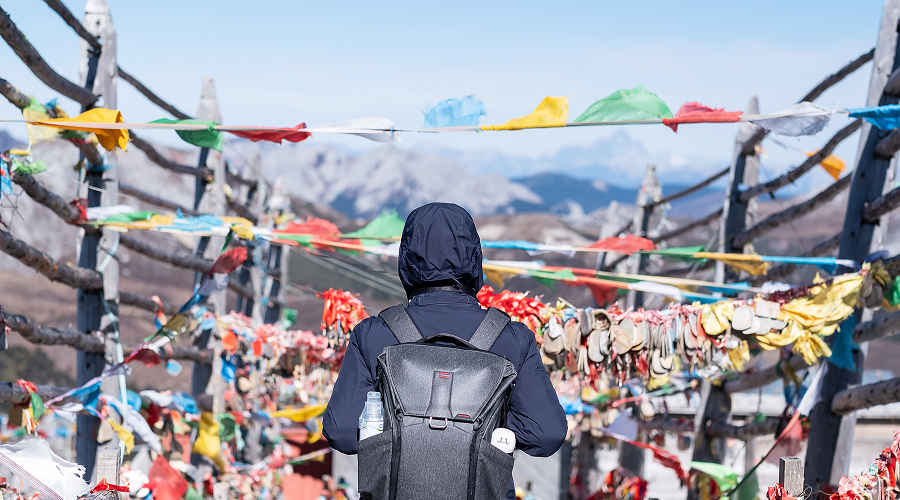
Respect begins with awareness. Photography should be approached with care, especially around pilgrims performing rituals or prostrations. Sacred sites should be treated with restraint. Prayer flags, mani stones, monasteries, and ritual objects are not decorative props, but part of a devotional world.
Physical preparation is equally important. The region’s altitude and remoteness demand realistic expectations. Travellers should allow time for acclimatisation and be prepared for weather, road conditions, and local requirements to affect the journey.
A thoughtful itinerary also makes space for context. Mount Kailash is most meaningful when travellers understand the beliefs, rituals, and histories that surround it. Expert local guidance can help interpret the landscape without flattening its mystery.
For travellers seeking a famous mountain in Tibet, the goal should not be to simply arrive, take photographs, and move on. The greater reward lies in slowing down enough to understand why the mountain matters.
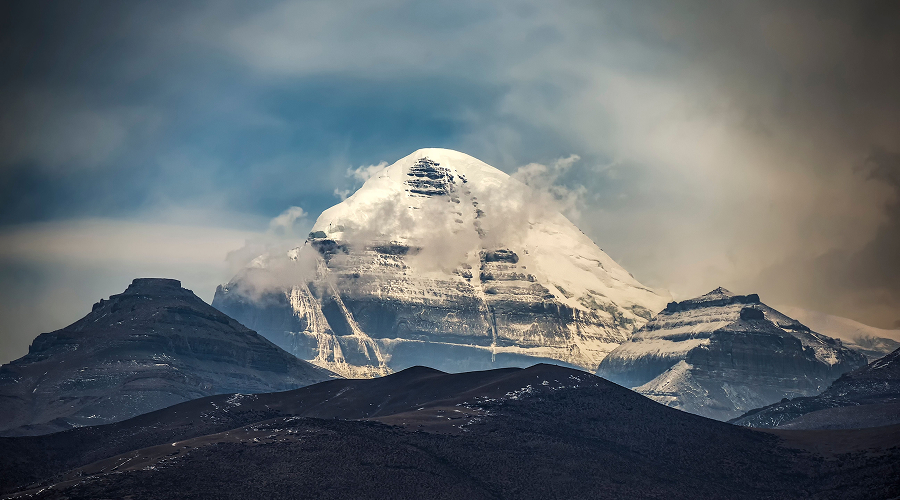
Reaching Mount Kailash requires more than a standard travel plan. The region lies in one of Tibet’s most remote areas, where altitude, distance, terrain, permits, and cultural considerations all shape the journey. A meaningful experience depends on thoughtful pacing, careful preparation, and a deep respect for the sacred nature of the landscape.
At Intriq Journey, we curate journeys that allow travellers to encounter Tibet with both comfort and cultural depth. In the context of Mount Kailash, this means designing itineraries that move carefully across the plateau, allowing time for acclimatisation, scenic overland travel, and guided insights into the spiritual traditions surrounding the mountain.
The experience may include vast drives across the Tibetan Plateau, visits to sacred lakes, encounters with pilgrimage routes, and the profound sight of devotees circling one of the world’s most revered peaks. Each detail is considered so the journey feels neither rushed nor superficial, but layered, sensitive, and deeply memorable.
For travellers seeking to understand a mountain that has held spiritual significance for centuries, Mount Kailash offers one of the most extraordinary journeys on Earth.
Contact us to begin planning a carefully curated journey to one of the world’s most sacred mountains.